

The Unruly Heart: Unpacking Desire as the Architect of Sin
In the grand tapestry of Western thought, few concepts are as persistently explored and hotly debated as the origins of human wrongdoing. From the ancient Greeks to the medieval scholastics, a recurring theme emerges: desire stands as a formidable, often insidious, cause of sin. This isn't merely a theological assertion but a profound philosophical inquiry into the nature of human agency, the will, and our susceptibility to moral transgression. This article delves into how philosophers, particularly those enshrined in the Great Books of the Western World, have grappled with the notion that our deepest cravings and appetites, left unchecked or misdirected, become the very architects of our downfall.
The Genesis of Transgression: Understanding Desire's Potency
To understand desire as the cause of sin, we must first define our terms. Desire, in this context, refers not merely to simple wants but to the deep-seated appetites, passions, and inclinations that drive human action. It encompasses everything from the primal urge for survival and procreation to the more complex yearnings for power, recognition, or pleasure. Sin, stripped of its purely religious connotations, can be understood philosophically as a deviation from reason, a transgression against natural law, or an act that harms oneself or others, disrupting order and virtue.
The Great Books offer a rich lineage for this perspective:
- Plato's Charioteer Analogy: In the Phaedrus, Plato famously depicts the soul as a charioteer (reason) guiding two winged horses: one noble and striving for honor (spirit), and the other unruly, dark, and prone to lust (appetite/desire). When the charioteer loses control of the dark horse, the soul is led astray, illustrating how unchecked desire can lead to a deviation from the good.
- Aristotle's Virtue Ethics: While not using the term "sin," Aristotle's concept of virtue hinges on the proper moderation of desire. Vice, for Aristotle, often arises from an excess or deficiency of passion, demonstrating how unregulated desire leads to moral failure. Courage, for instance, is the mean between the excess of rashness and the deficiency of cowardice, both stemming from improperly managed fear (a form of desire for safety).
- Augustine's Concupiscence: Perhaps the most direct articulation comes from St. Augustine in his Confessions and City of God. For Augustine, after the Fall, human will became weakened, and desire (or concupiscence) became disordered. This disordered desire, an internal pull towards lesser goods, is the proximate cause of sin. It tempts the will, which, in its fallen state, often succumbs.
The Interplay of Desire and Will: A Philosophical Battleground
The relationship between desire and the will is critical in understanding sin's genesis. Is desire an irresistible force, or does the will retain ultimate culpability?
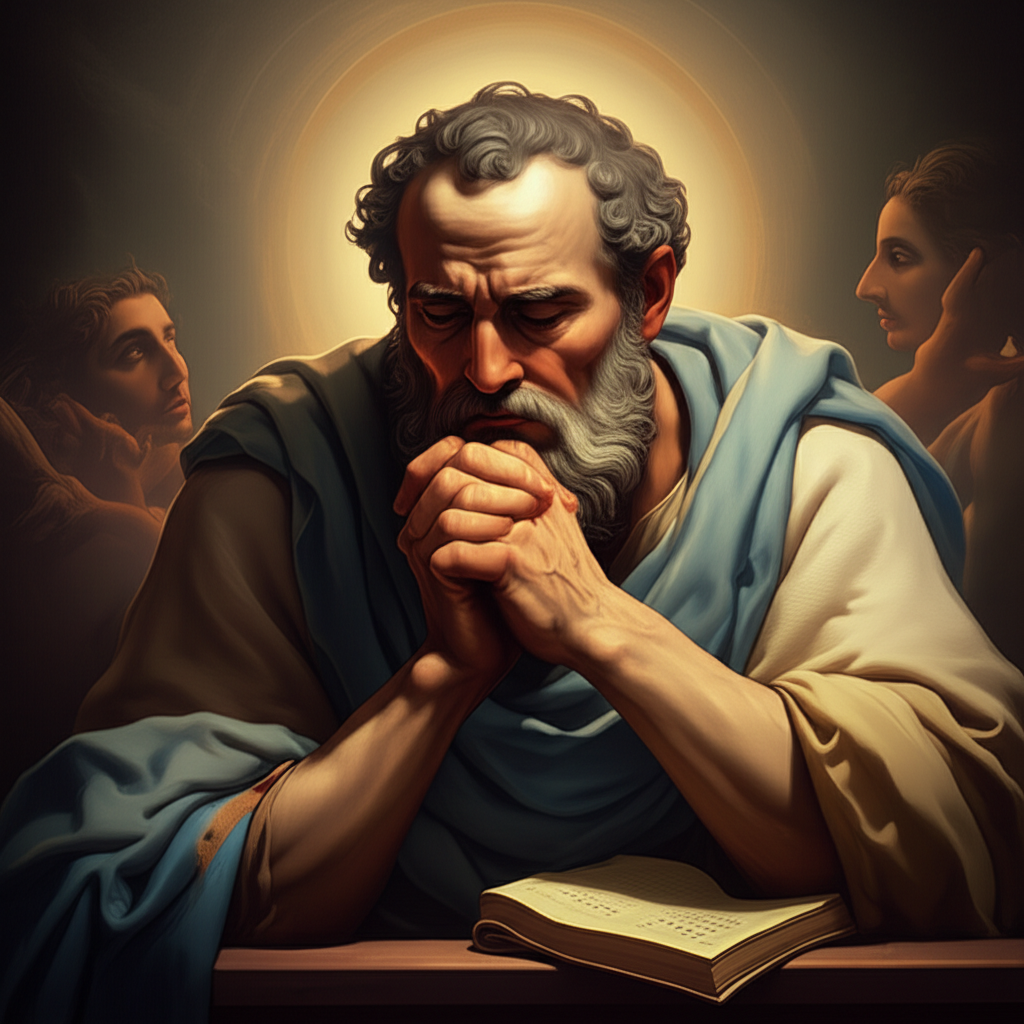
Philosophers have offered nuanced views:
- Desire as a Precursor: Many agree that desire often presents the temptation. It is the internal or external stimulus that makes an unvirtuous act appealing.
- The Will's Assent: However, the majority of Great Books thinkers, from Augustine to Aquinas, emphasize that sin proper occurs when the will assents to the disordered desire. It is the will's choice to follow the lower appetite rather than the dictates of reason or divine law. Desire might knock at the door, but the will decides whether to open it.
- Weakness of Will (Akrasia): This concept, explored by Plato and Aristotle, describes the phenomenon where one knows the good but acts against it, often due to being overcome by strong desire. This highlights the struggle between rational judgment and passionate impulse, where desire, for a moment, triumphs over the will's better judgment.
Table: Desire's Role in Sin According to Key Thinkers
| Philosopher | Primary Contribution to Desire & Sin | Key Concept |
|---|---|---|
| Plato | Unchecked appetite leads astray | Charioteer Analogy, disordered soul |
| Aristotle | Excess/deficiency of passion is vice | Virtue as the mean, moderation of desire |
| St. Augustine | Disordered desire (concupiscence) | Weakened will, assent to lower goods |
| St. Thomas Aquinas | Desire as a movement towards a good | Rational appetite (will) vs. sensitive appetite (passion), sin is choosing an apparent good over a true good |
The Consequences of Misdirected Desire
When desire becomes the cause of sin, the implications are profound, extending beyond individual moral failing to societal disruption.
- Erosion of Rationality: Sin, born of unchecked desire, often involves a temporary or prolonged abandonment of reason. The pursuit of immediate gratification or selfish ends overrides prudent judgment and long-term well-being.
- Internal Conflict: The individual who succumbs to desire experiences internal discord. The rational part of the soul is at war with the appetitive, leading to guilt, regret, and a fractured sense of self.
- Social Disorder: Many sins, such as greed, envy, or lust, directly impact others, leading to injustice, exploitation, and societal breakdown. The unchecked desires of individuals can accumulate to create systemic problems.
Philosophically, the recognition of desire as a powerful, potentially destructive force encourages a life of self-mastery, discipline, and the cultivation of virtues. It calls for an examination of our internal landscape, a constant vigilance over our appetites, and a deliberate orientation of our will towards what is truly good and rational.
Conclusion: Mastering the Inner Landscape
The assertion that desire is the cause of sin is a cornerstone of Western philosophical inquiry into human nature and morality. While the will ultimately bears responsibility for choosing to act upon or resist these desires, it is the potent, often unruly, nature of our appetites that presents the initial temptation and constant challenge. The great minds of antiquity and the medieval period consistently remind us that true freedom lies not in the unrestrained indulgence of every craving, but in the rational mastery of our desires, guiding them towards virtue and the pursuit of genuine human flourishing. Understanding this dynamic is not merely an academic exercise; it is a vital step towards self-knowledge and the cultivation of a truly ethical life.
📹 Related Video: PLATO ON: The Allegory of the Cave
Video by: The School of Life
💡 Want different videos? Search YouTube for: ""Augustine on Evil and Free Will""
📹 Related Video: PLATO ON: The Allegory of the Cave
Video by: The School of Life
💡 Want different videos? Search YouTube for: ""Plato's Republic: The Soul and Justice Explained""