

Defining Beauty in Abstract Art: A Philosophical Inquiry
The quest to define beauty has occupied philosophers for millennia, a journey complicated further by the advent of abstract art. This article seeks to explore the multifaceted nature of beauty within abstract expressions, challenging conventional definitions and proposing that form, intent, and viewer reception are key to understanding its unique aesthetic appeal. We will delve into how abstract art reshapes our perception of what is aesthetically pleasing, moving beyond mimetic representation to a deeper engagement with underlying structures and emotional resonance.
The Elusive Nature of Beauty: From Ideal Forms to Non-Objective Canvases
For centuries, the definition of beauty was often tethered to concepts of harmony, proportion, and imitation of nature, echoing the classical ideals found in the Great Books of the Western World. Plato, for instance, posited beauty as a transcendent Form, an ideal existing independently of any particular object, while Aristotle emphasized order, symmetry, and definite magnitude as crucial elements. These perspectives offered a relatively stable framework for understanding beauty in representational art.
However, the 20th century ushered in a radical shift with the rise of abstract art. No longer bound by the imperative to depict recognizable subjects, artists began to explore pure color, line, shape, and texture. This departure from mimesis presents a profound challenge: if beauty is not found in the faithful rendering of reality, where then does it reside in a work that deliberately abstracts or entirely abandons representational form?
Subheading: Abstract Art: A Challenge to Conventional Definitions
Abstract art compels us to re-evaluate our preconceived notions. It asks us to look beyond the "what is it?" and instead consider "how does it feel?" or "what does it evoke?" The beauty in a Rothko color field, a Kandinsky improvisation, or a Mondrian grid is not the beauty of a serene landscape or a perfectly sculpted figure. It is a beauty that often resonates on a more primal or intellectual level, engaging our senses and minds in novel ways.
The Primacy of Form and Feeling in Abstract Expression
In abstract art, the internal logic and structure of the work take precedence. It is here that the concept of form becomes paramount. The arrangement of elements, the interplay of colors, the rhythm of lines—these are the aesthetic components that construct the artwork's unique identity and potential for beauty.
Elements Contributing to Beauty in Abstract Art:
- Color Harmony and Contrast: The deliberate choice and juxtaposition of colors can create powerful emotional responses or visual equilibrium. A vibrant clash might evoke tension, while subtle gradations might suggest tranquility.
- Compositional Balance: Even without recognizable objects, the distribution of visual weight, positive and negative space, and directional forces contributes to a sense of order or dynamic energy.
- Texture and Surface Quality: The tactile nature of the paint, the brushstrokes, or the materials used can add a sensory dimension, inviting closer inspection and interaction.
- Rhythm and Movement: Repetition, variation, and the flow of lines or shapes can create a visual rhythm that guides the eye and evokes a sense of movement or stillness.
- Emotional Resonance: Perhaps the most subjective, yet undeniable, aspect is the capacity of abstract form to elicit emotions, memories, or a sense of the sublime, much like music.
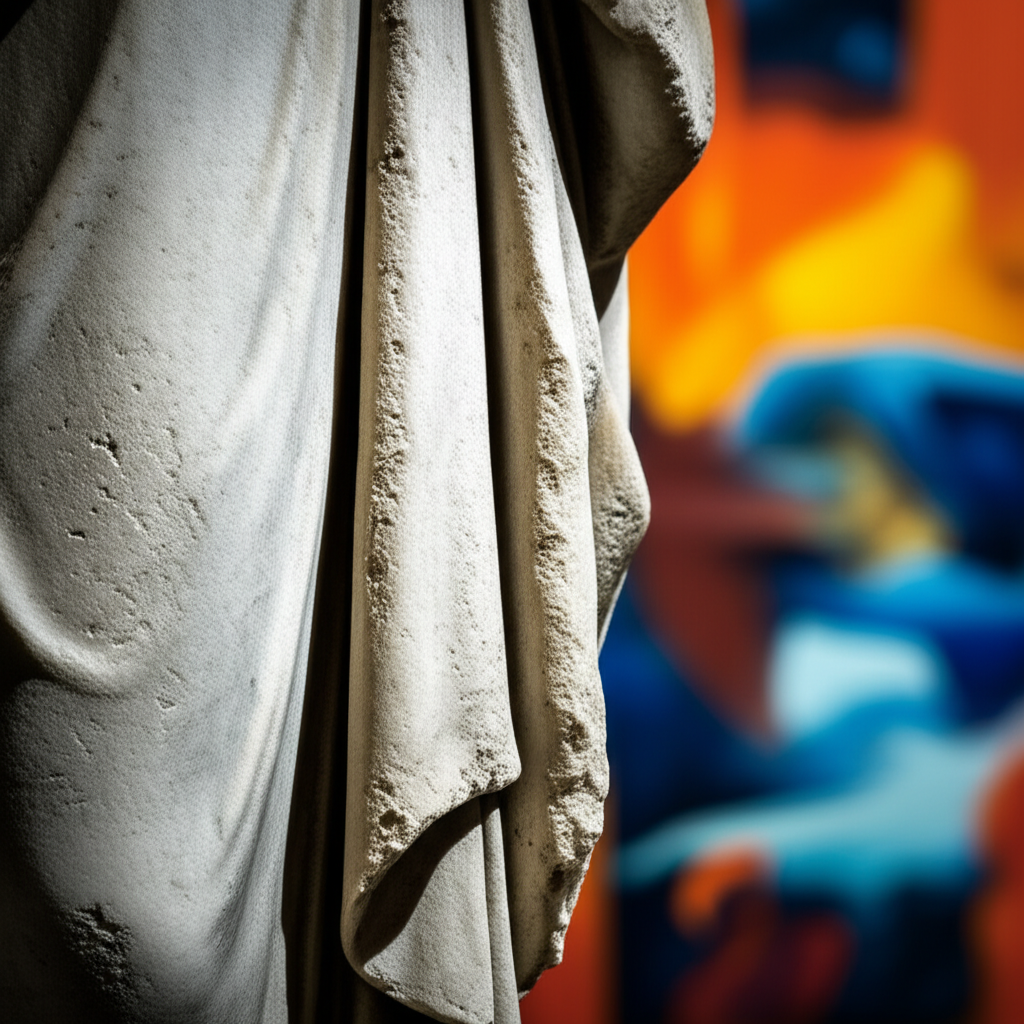
It is through these formal qualities that abstract art communicates. The beauty, then, is often found not in what it depicts, but in what it is and what it does to the viewer. This shifts the definition of beauty from an objective quality of the object itself to a more relational experience between the artwork and the observer.
Reclaiming Definition: A Philosophical Lens on Abstract Beauty
To define beauty in abstract art, we must embrace a broader philosophical perspective, acknowledging both objective principles of form and subjective experiences. Immanuel Kant, another luminary from the Great Books, spoke of aesthetic judgment as a "disinterested pleasure," a feeling of delight that arises from the free play of our cognitive faculties when contemplating a beautiful object, independent of any concept or purpose. This idea resonates strongly with abstract art, where there's no clear concept to grasp, only the pure experience of form.
The definition of beauty in this context becomes less about universal standards and more about the evocative power of art. It is the artist's ability to manipulate form to create a compelling visual experience, and the viewer's openness to engage with that experience on its own terms.
Subheading: The Viewer's Role and the Artist's Intent
The definition of beauty in abstract art often hinges on a delicate interplay between the artist's intent and the viewer's interpretation. The artist, through their choices of form, color, and composition, imbues the work with a certain aesthetic intention. The viewer, in turn, brings their own experiences, emotions, and intellectual frameworks to the encounter.
For some, beauty in abstract art might be an intellectual satisfaction derived from discerning the underlying structure or the artist's technical prowess. For others, it might be a profound emotional connection, a sense of awe, or even discomfort that provokes thought. The beauty lies not in a fixed attribute, but in the dynamic interaction, the dialogue between the artwork and the individual.
Ultimately, defining beauty in abstract art is not about finding a single, immutable standard. It is about understanding the diverse ways in which non-representational form can resonate with the human spirit, challenge our perceptions, and expand our understanding of what art can be. It is a testament to the enduring power of human creativity to find and create beauty in the most unexpected and unconstrained expressions.
YouTube: "What is Beauty Philosophy"
YouTube: "Understanding Abstract Art Philosophy"
📹 Related Video: What is Philosophy?
Video by: The School of Life
💡 Want different videos? Search YouTube for: "Defining Beauty in Abstract Art philosophy"