

Beyond the Mirror: Defining Beauty in Abstract Art
The quest to define beauty has occupied philosophers for millennia, from the ancient Greeks pondering perfect form to modern thinkers grappling with the subjective nature of aesthetic experience. Yet, when we turn our gaze to abstract art, this ancient pursuit takes on a profoundly new dimension. How do we articulate beauty in a canvas devoid of recognizable objects, where line, color, and texture reign supreme? This article delves into the philosophical challenges and rewards of discerning beauty in the realm of abstract expression, suggesting that its definition demands a shift in our perceptual and intellectual paradigms.
The Elusive Canvas: Reconciling Traditional Aesthetics with Abstract Expression
For centuries, the prevailing definition of beauty in art was inextricably linked to mimesis – the imitation of nature. Plato, in his Republic, spoke of beauty as a reflection of ideal forms, while Aristotle, in his Poetics, explored art as an imitation that could evoke catharsis. The classical ideals championed proportion, harmony, and a clear, recognizable form.
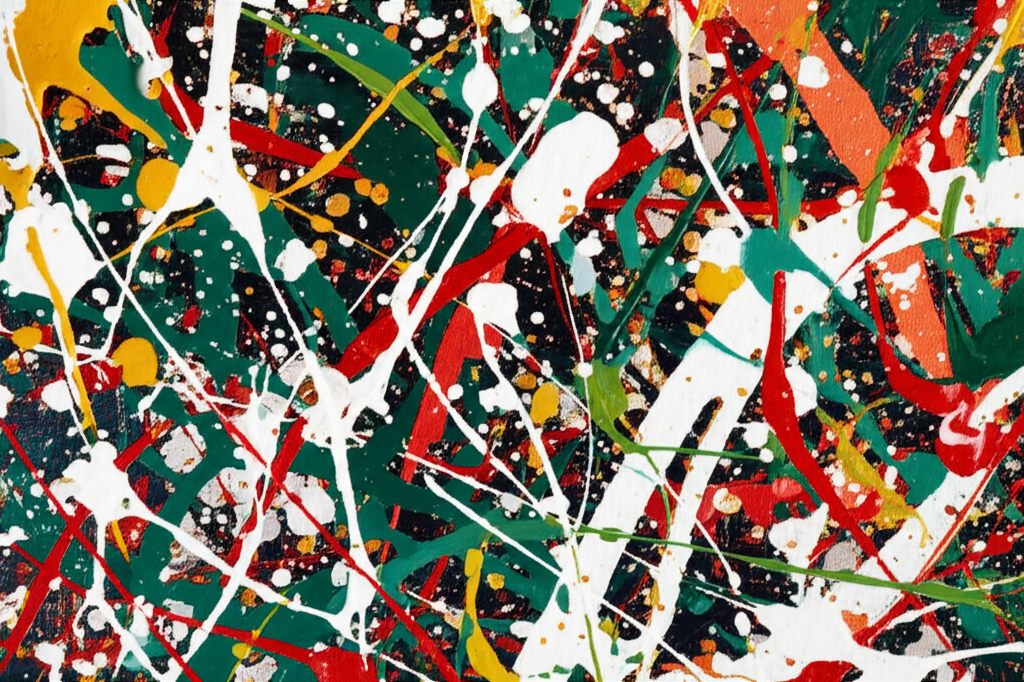
However, the advent of abstract art in the early 20th century shattered these conventions. Artists like Kandinsky, Mondrian, and Pollock deliberately moved away from representation, presenting canvases that challenged the viewer to find meaning and aesthetic pleasure not in what was depicted, but in the purely visual elements themselves. This seismic shift necessitates a re-evaluation of our aesthetic criteria. If beauty is not found in the faithful rendering of a landscape or a portrait, where then does it reside in a splash of color or a geometric composition?
Traditional vs. Abstract Artistic Beauty
| Criterion | Traditional Art (e.g., Renaissance) | Abstract Art (e.g., Cubism, Abstract Expressionism) |
|---|---|---|
| Primary Goal | Representation, narrative, idealization | Expression, sensation, conceptual exploration |
| Definition of Beauty | Proportion, harmony, verisimilitude, moral content | Emotional impact, formal integrity, intellectual provocation, sensory experience |
| Key Elements | Subject matter, realism, perspective | Line, color, shape, texture, composition, movement |
| Viewer's Role | Recognition, appreciation of skill | Interpretation, emotional engagement, intellectual challenge |
The Subjective Gaze and the Objective Form: A Dichotomy of Definition
One immediate response to abstract art is often, "I don't get it," or "My child could do that." This highlights the deeply subjective nature of our initial encounter. Immanuel Kant, in his Critique of Judgment, posited the idea of "disinterested pleasure" – an aesthetic judgment that is not tied to personal desire or utility. While Kant largely considered representational art, his framework can be adapted. For abstract art, true aesthetic appreciation might involve stepping back from the need to "understand" or "recognize" and instead allowing the work to simply be, engaging with its pure visual form.
Yet, to dismiss all abstract beauty as purely subjective would be an oversimplification. There are objective elements within abstract compositions that contribute to their perceived aesthetic value. These include:
- Compositional Balance: The arrangement of elements, even if non-representational, can create a sense of equilibrium or dynamic tension.
- Color Theory: The interplay of hues, saturation, and light can evoke specific emotions or create visual harmony/dissonance.
- Line and Shape: The quality of lines (bold, delicate, erratic) and shapes (organic, geometric) contributes to the overall form and energy of the piece.
- Texture: The tactile quality, whether implied or actual, adds depth and interest.
When we consider these elements, we begin to formulate a more nuanced definition of beauty in abstract art. It's not merely what we feel, but how the artist has masterfully manipulated these fundamental visual components to create a compelling and cohesive form.
The Artist's Intent and the Viewer's Journey
The definition of beauty in abstract art is also shaped by the dialogue between the artist's intent and the viewer's interpretation. The abstract artist often aims to communicate emotions, ideas, or even spiritual concepts that transcend literal representation. Kandinsky, for instance, believed in the spiritual in art, using color and form to evoke inner feelings.
For the viewer, engaging with abstract art becomes an active process of discovery. It demands a willingness to:
- Embrace Ambiguity: To accept that there isn't one single "correct" interpretation.
- Engage Emotionally: To allow the colors, lines, and forms to evoke feelings or memories.
- Think Philosophically: To ponder the artist's choices, the nature of perception, and the very essence of beauty beyond the familiar.
This journey of interpretation is precisely where much of the beauty of abstract art lies. It's not a passive consumption but an active co-creation of meaning, where the artwork acts as a catalyst for introspection and sensory exploration.
Towards a Contemporary Definition of Abstract Beauty
Ultimately, defining beauty in abstract art requires moving beyond the constraints of traditional aesthetics. It's not about what the art looks like, but what it does and how it does it.
A contemporary definition might encompass:
- Evocative Power: The ability of the art to stir emotions, provoke thought, or ignite a sense of wonder.
- Formal Integrity: The masterful arrangement of visual elements (color, line, shape, texture) that creates a compelling and cohesive form, even in its abstraction.
- Sensory Engagement: The capacity to captivate the eye through unique visual relationships and sensory experiences.
- Intellectual Challenge: The invitation to question, interpret, and expand one's understanding of art and perception.
- Authenticity of Expression: The sense that the art is a genuine and unmediated expression of the artist's inner world or philosophical inquiry.
In this light, beauty in abstract art is not a static attribute but a dynamic interaction. It is found in the unexpected harmony of dissonant colors, the powerful simplicity of a single line, or the overwhelming complexity of a chaotic form. It is a beauty that challenges, expands, and ultimately enriches our understanding of what art can be. The Great Books of the Western World teach us that the pursuit of definition is eternal; in abstract art, this pursuit finds one of its most compelling modern frontiers.
YouTube: "Philosophy of Abstract Art Explained"
YouTube: "Kant's Aesthetics and the Judgment of Beauty"
📹 Related Video: What is Philosophy?
Video by: The School of Life
💡 Want different videos? Search YouTube for: "Defining Beauty in Abstract Art philosophy"