

Defining Beauty in Abstract Art: An Exploration of Form and Feeling
Summary: Unveiling Aesthetic Value Beyond Representation
For centuries, the definition of beauty in art was inextricably linked to mimesis—the accurate imitation of nature or an idealized human form. Abstract art, however, challenges this long-held premise, forcing us to re-evaluate our understanding of aesthetic value. This article posits that beauty in abstract art is not found in recognizable subjects, but rather in the masterful manipulation of pure form—line, color, shape, and texture—and in the profound intellectual and emotional resonance it evokes in the viewer. Drawing on philosophical traditions that emphasize innate aesthetic judgment and the power of pure form, we will explore how abstract art expands, rather than diminishes, our capacity to perceive and appreciate beauty.
The Elusive Charm of the Abstract: A New Lens for Beauty
For those accustomed to the classical ideals of beauty—the harmonious proportions of a Greek statue, the dramatic realism of a Renaissance fresco—abstract art often presents a formidable puzzle. Where, one might ask, is the beauty in a splash of paint, a geometric arrangement, or a canvas devoid of recognizable figures? This question, far from being a dismissal, opens a profound philosophical inquiry into the very definition of beauty itself. As students of the Great Books of the Western World know, philosophers from Plato to Kant have grappled with the essence of aesthetic judgment. Abstract art compels us to revisit these foundational inquiries, not with the aim of dismissing the new, but of enriching our understanding of what art can be and how beauty manifests.
Beyond Mimesis: A Philosophical Shift in Aesthetic Understanding
Historically, the definition of beauty in art was heavily influenced by the concept of mimesis. Plato, in his Republic, viewed art as an imitation, twice removed from the ideal Forms. While he recognized an intrinsic beauty in pure Forms themselves, representational art was often seen as a mere shadow of reality. Aristotle, in his Poetics, refined this, emphasizing the artist's ability to imitate not just what is, but what ought to be, or what is universally true, through structure and plot.
Abstract art fundamentally breaks with this mimetic tradition. It does not seek to imitate the external world but to express an internal reality, an emotion, a concept, or simply the inherent aesthetic qualities of its constituent elements. This shift forces us to look for beauty not in the artist's fidelity to nature, but in their mastery of the artistic medium itself. The beauty is no longer a quality of the depicted object, but of the art object in its own right, a testament to its inherent form.
The Primacy of Form: The New Language of Beauty
In abstract art, form reigns supreme. Without a discernible subject matter, the elements of art—line, color, shape, texture, and composition—become the art itself. The beauty emerges from the artist's deliberate and often intuitive arrangement of these elements, creating a visual language that speaks directly to our senses and intellect.
Consider the following fundamental elements and their role in defining beauty in abstract art:
- Line: No longer merely an outline, line in abstract art can convey energy, direction, tension, or serenity. Its form itself can be graceful, aggressive, delicate, or bold.
- Color: Freed from representing specific objects, color becomes an independent agent of emotion and meaning. Hues clash or harmonize, creating depth, light, and mood. The purity and intensity of color can be profoundly beautiful.
- Shape: Whether geometric or organic, shapes create rhythm, balance, and visual interest. Their interplay defines the composition and can evoke feelings of order, chaos, dynamism, or stillness.
- Texture: The tactile quality of the surface—smooth, rough, layered, thin—adds another dimension to the aesthetic experience. It invites engagement, suggesting a history of creation and physical presence.
- Composition: The overall arrangement of these elements creates the unified form of the artwork. A balanced, dynamic, or intriguing composition can be inherently beautiful, drawing the eye and holding attention.
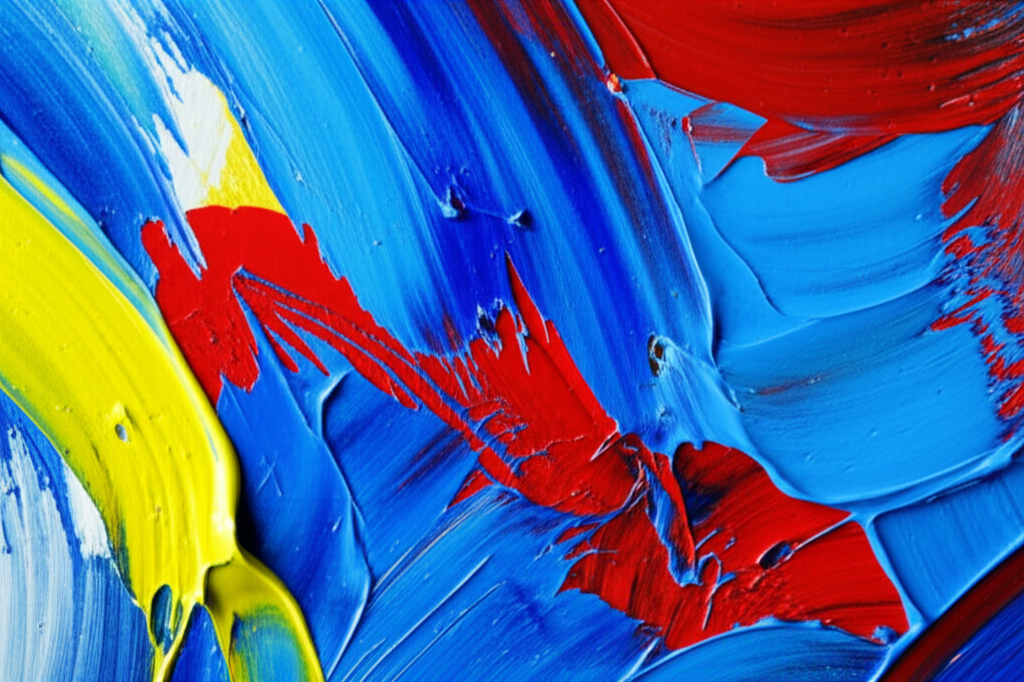
This focus on form aligns with aspects of Kant's aesthetics, particularly his concept of "disinterested judgment." When we appreciate abstract art, we are not judging it based on a concept, purpose, or moral utility, but solely on its aesthetic form—the harmonious play of its elements that gives rise to a feeling of pleasure. The beauty is found in the way these elements are presented, inviting contemplation for their own sake.
Subjectivity, Resonance, and the Viewer's Role
While the appreciation of abstract art often feels intensely subjective, it is not arbitrary. The beauty perceived is a result of a complex interplay between the artwork's intrinsic form and the viewer's individual experience, cultural background, and emotional state. Yet, there is a universal capacity for aesthetic experience that allows for shared appreciation.
Abstract art demands active engagement. It doesn't offer a narrative to follow or an object to identify. Instead, it invites the viewer to participate in the act of definition, to project their own feelings and interpretations onto the canvas. The beauty then becomes a co-created experience, a moment of profound resonance where the artwork's form unlocks something within the observer. This can be an intellectual stimulation, an emotional catharsis, or a simple, irreducible feeling of aesthetic pleasure. It can even evoke a sense of the sublime, where the vastness or complexity of the artwork transcends our immediate comprehension, leading to a feeling of awe.
The Definition Expands: Beauty as Pure Aesthetic Experience
Ultimately, defining beauty in abstract art requires us to expand our traditional frameworks. It moves beyond the perfect imitation of nature or the ideal human form and embraces the inherent aesthetic power of pure visual elements. The beauty resides in:
- The masterful execution and arrangement of form (line, color, shape, texture).
- The emotional and intellectual resonance it evokes in the viewer.
- The challenge it poses to our perceptions, encouraging new ways of seeing and feeling.
- Its capacity to convey universal truths or profound emotions without explicit narrative.
It is a beauty that is less about what is depicted and more about how it is presented, and how that presentation affects us. It is the beauty of pure aesthetic experience, unburdened by the need for representation.
Conclusion: A Richer Understanding of Aesthetic Value
Abstract art, far from being a deviation from beauty, offers a profound re-imagining of its definition. It strips away the familiar, challenging us to find aesthetic value in the raw, elemental language of form. By doing so, it deepens our understanding of art's potential, affirming that beauty is not solely a property of the natural world, but an intrinsic quality that can be created, manipulated, and experienced through the sheer power of human ingenuity and expression. It reminds us that the quest for beauty is an eternal human endeavor, evolving with every brushstroke and every new perspective.
Further Exploration:
📹 Related Video: KANT ON: What is Enlightenment?
Video by: The School of Life
💡 Want different videos? Search YouTube for: "Kant's Aesthetics and the Sublime"
📹 Related Video: What is Philosophy?
Video by: The School of Life
💡 Want different videos? Search YouTube for: "Abstract Expressionism Explained Philosophy"