

The Elusive Canvas: Defining Beauty in Abstract Art
A Summary of Our Aesthetic Quandary
The pursuit of Beauty has long been a cornerstone of philosophical inquiry, a quest to articulate that elusive quality which moves us, delights us, and elevates our spirit. Yet, when we turn our gaze to the realm of abstract Art, the traditional signposts often vanish. How do we apply a Definition of Beauty to works that deliberately eschew representational Form? This article delves into this profound question, drawing upon classical philosophical insights from the Great Books of the Western World to forge a new understanding of Beauty in the non-objective, arguing that it resides not in imitation, but in the intrinsic Form, composition, and profound resonance of the artwork itself, demanding an active, engaged viewer.
When Representation Fades: The Abstract Dilemma
For centuries, much of Western Art operated under the assumption that its primary function was mimesis—the imitation or representation of reality. From the meticulous detail of a Renaissance portrait to the dramatic landscapes of the Romantics, Beauty was often found in the skillful rendering of the visible world, imbued with harmony, proportion, and narrative coherence. But the advent of abstract Art in the early 20th century shattered this paradigm. Artists like Wassily Kandinsky, Piet Mondrian, and Jackson Pollock presented canvases devoid of recognizable objects, figures, or scenes. Lines, colors, shapes, and textures became the primary subjects, challenging viewers to confront Art on entirely new terms.
This shift presented a significant philosophical challenge: if Beauty is tied to discernible objects or ideal representations, how can a splash of paint or a geometric arrangement be considered beautiful? The very Definition of Beauty seemed to crumble, leaving many bewildered or dismissive. Yet, the enduring power and popularity of abstract Art suggest that it taps into a fundamental human appreciation for something beyond mere recognition.
Echoes of Antiquity: Beauty's Philosophical Roots
To navigate this contemporary quandary, we must, as Henry Montgomery often reminds us, revisit the foundational thinkers who first grappled with Beauty. The Great Books of the Western World offer a rich tapestry of perspectives, many of which, surprisingly, provide fertile ground for understanding abstract Beauty.
The Platonic Ideal and Abstract Form
Plato, in dialogues such as Symposium and Phaedrus, posits Beauty as an objective, transcendent Form—an eternal, unchanging essence existing independently of the physical world. For Plato, particular beautiful objects are beautiful only insofar as they participate in, or imperfectly reflect, this ultimate Form of Beauty.
How does this apply to abstract Art? Perhaps abstract Art, by shedding the veil of imitation, attempts to directly access or evoke these pure Forms. Instead of depicting a beautiful person or landscape, it might strive to present Beauty in its unadulterated essence—through the harmonious arrangement of colors, the tension of lines, or the balance of masses. The Form of the abstract work itself, its internal logic and coherence, might be seen as a direct manifestation of an underlying ideal, a glimpse into the Platonic realm of pure ideas. The Definition of Form here expands beyond mere shape to encompass the structural integrity and conceptual purity of the artwork.
Aristotle's Order and the Abstract Composition
Aristotle, in works like Poetics and Metaphysics, grounds Beauty in more empirical terms, emphasizing qualities such as order, symmetry, and definite magnitude. He believed that a beautiful object must have a proper arrangement of parts, a harmonious relationship between them, and a size that allows for comprehensive perception.
| Aristotelian Principle | Application to Abstract Art |
|---|---|
| Order | The deliberate arrangement of elements (lines, shapes, colors) to create a coherent and intelligible structure, even if non-representational. |
| Symmetry/Proportion | A sense of balance, equilibrium, or rhythmic repetition within the composition, not necessarily symmetrical in the mirror-image sense, but in visual weight and distribution. |
| Definite Magnitude | The artwork presents itself as a unified whole, perceivable and understandable within its own boundaries, without extraneous or overwhelming elements. |
An abstract painting, despite its lack of recognizable subjects, can exhibit profound order in its composition, a dynamic balance of forces, and a precise magnitude of visual information. The Beauty here is found in the artist's masterful control over these elements, creating an internal cosmos that resonates with our innate appreciation for structured elegance.
Kant's Subjective Universal: The Viewer's Gaze
Immanuel Kant, in his Critique of Judgment, offers a pivotal shift by placing Beauty within the realm of subjective experience, yet seeking a "subjective universality." For Kant, a judgment of Beauty is disinterested—it arises from no practical or conceptual interest—and yet we expect others to agree with our judgment. The experience of Beauty engages our faculties of imagination and understanding in a harmonious free play.
This perspective is particularly illuminating for abstract Art. Since there's no objective concept (like "a horse" or "a landscape") to judge against, the viewer's engagement becomes paramount. The Beauty of an abstract piece often lies in its capacity to stimulate this "free play" of our cognitive faculties, inviting personal interpretation, emotional response, and intellectual contemplation without dictating a specific meaning. The artwork provides the stimulus, but the Definition of its Beauty is co-created in the encounter between the art and the individual.
Reclaiming Form: The Heart of Abstract Beauty
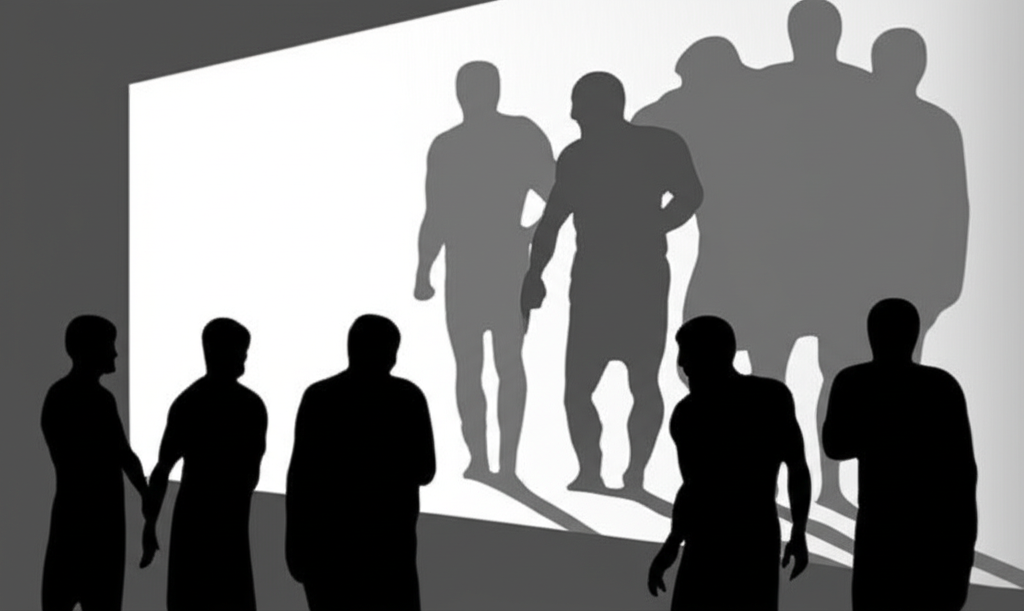
Ultimately, Defining Beauty in abstract Art requires us to re-evaluate the concept of Form. It is no longer merely the outline of a recognizable object but becomes the entire structure of the artwork—its composition, its color relationships, its textural qualities, its rhythm, and its internal coherence.
- Color as Pure Expression: In abstract Art, color is liberated from descriptive duties. It becomes an emotional force, a structural element, a source of pure aesthetic delight. The interplay of hues, their saturation, and their value can create harmonies or dissonances that evoke profound feelings.
- Line and Shape as Dynamic Forces: Lines are not boundaries of objects but trajectories, energies, rhythms. Shapes are not containers for content but entities in themselves, interacting and creating tension or balance.
- Texture and Materiality: The physical qualities of the paint, the canvas, the materials used—their roughness, smoothness, opacity—contribute directly to the aesthetic experience, engaging our tactile sense alongside the visual.
The Beauty of an abstract work, therefore, lies in its integrity of Form, its ability to create a self-sufficient world of visual relationships that resonate with our deepest aesthetic sensibilities. It asks us to appreciate Art for its own sake, for the sheer power of its arrangement, for its ability to communicate directly to our senses and emotions without the mediation of narrative or representation.
The Enduring Quest for Definition
The journey to Define Beauty in abstract Art is not about finding a single, universal answer that applies to all pieces. Rather, it's about understanding the mechanisms through which abstract works achieve their aesthetic power. By revisiting the enduring philosophical insights of Plato, Aristotle, and Kant, we find that the foundations for appreciating Beauty—whether as an ideal Form, a harmonious order, or a subjective universal experience—remain relevant. Abstract Art challenges us to look beyond the surface, to engage with the essential qualities of Form, and to discover Beauty in the pure, unadulterated language of Art itself. It is a testament to the enduring human capacity to find meaning and delight in the non-representational, pushing the boundaries of what Beauty can be.
📹 Related Video: PLATO ON: The Allegory of the Cave
Video by: The School of Life
💡 Want different videos? Search YouTube for: ""Plato's Theory of Forms and Aesthetics Explained""
📹 Related Video: KANT ON: What is Enlightenment?
Video by: The School of Life
💡 Want different videos? Search YouTube for: ""Kant's Critique of Judgment and Abstract Art""