

Defining Beauty in Abstract Art: An Exploration of Form and Idea
Summary: The conventional definition of beauty, often rooted in mimicry of nature or adherence to classical forms, faces a profound challenge when confronted with abstract art. This article explores how we perceive and define beauty in works devoid of representational content, drawing upon philosophical insights from the Great Books of the Western World. We will argue that abstract art compels us to broaden our understanding of beauty, shifting focus from external resemblance to the intrinsic qualities of form, the interplay of elements, and the viewer's subjective yet universally resonant experience.
The Elusive Nature of Beauty in Abstraction
For centuries, the definition of beauty in art was inextricably linked to mimesis – the faithful imitation of nature, or to the harmonious proportions and ideal forms established by classical aesthetics. From the sculptures of ancient Greece to the Renaissance masterpieces, beauty was often found in the recognizable, the perfectly rendered, or the morally uplifting. Yet, with the advent of abstract art in the early 20th century, this paradigm shattered. How, then, do we speak of beauty in a Rothko canvas, a Kandinsky composition, or a Pollock drip painting, where the subject is not a person, a landscape, or an object, but rather pure color, line, and form?
This fundamental question forces a re-evaluation of what beauty truly is, compelling us to look beyond the surface of representation and delve into the philosophical underpinnings of aesthetic experience. Abstract art doesn't merely present a new style; it demands a new way of seeing, feeling, and defining.
From Mimesis to Meaning: Re-evaluating Art's Purpose
Philosophers like Plato and Aristotle, whose works form cornerstones of the Great Books, extensively discussed art in relation to truth and imitation. Plato, in his Republic, viewed art as a mere imitation of an imitation, two steps removed from the ideal Forms. For him, true beauty resided in the transcendent, perfect Forms themselves, not in their earthly shadows. Aristotle, in his Poetics, considered art a form of mimesis that could reveal universal truths and evoke catharsis. In both cases, the form of art was tied to its capacity to represent or reflect something external.
Abstract art radically departs from this tradition. It liberates form from the burden of representation, allowing it to speak for itself. A line is not merely the edge of a figure; it is a line, with its own dynamism, direction, and expressive power. A color is not merely the hue of a sky; it is a color, with its own emotional resonance and vibrational quality. In this context, the definition of beauty must shift. It is no longer about the accuracy of portrayal but about the inherent qualities of the forms themselves – their balance, tension, rhythm, and the emotional or intellectual response they elicit.
The Kantian Lens: Disinterested Pleasure and the Sublime
Perhaps the most potent philosophical framework for understanding beauty in abstract art comes from Immanuel Kant's Critique of Judgment. Kant introduced the concept of "disinterested pleasure" – the idea that aesthetic judgment is not based on personal desire, utility, or conceptual understanding, but on a pure, unadulterated appreciation of form. When we find something beautiful, according to Kant, we are not interested in its existence or purpose, but in the harmonious play of our cognitive faculties (imagination and understanding) evoked by the object's form.
This concept is profoundly relevant to abstract art. A Rothko painting, for instance, offers no narrative, no recognizable subject. Its beauty arises from the sheer interaction of its colored fields, their subtle bleeding edges, and the profound emotional depth they evoke. This is a beauty experienced without a concept, a "purposiveness without purpose."
Furthermore, Kant’s idea of the sublime also resonates with abstract art. The sublime is not merely beautiful; it is vast, overwhelming, and even terrifying, yet it evokes a sense of awe and elevates the mind. Many abstract works, through their scale, intensity, or the boundless energy of their forms, can transport the viewer to a state of the sublime, challenging our capacity for comprehension and revealing the limits of our empirical understanding.
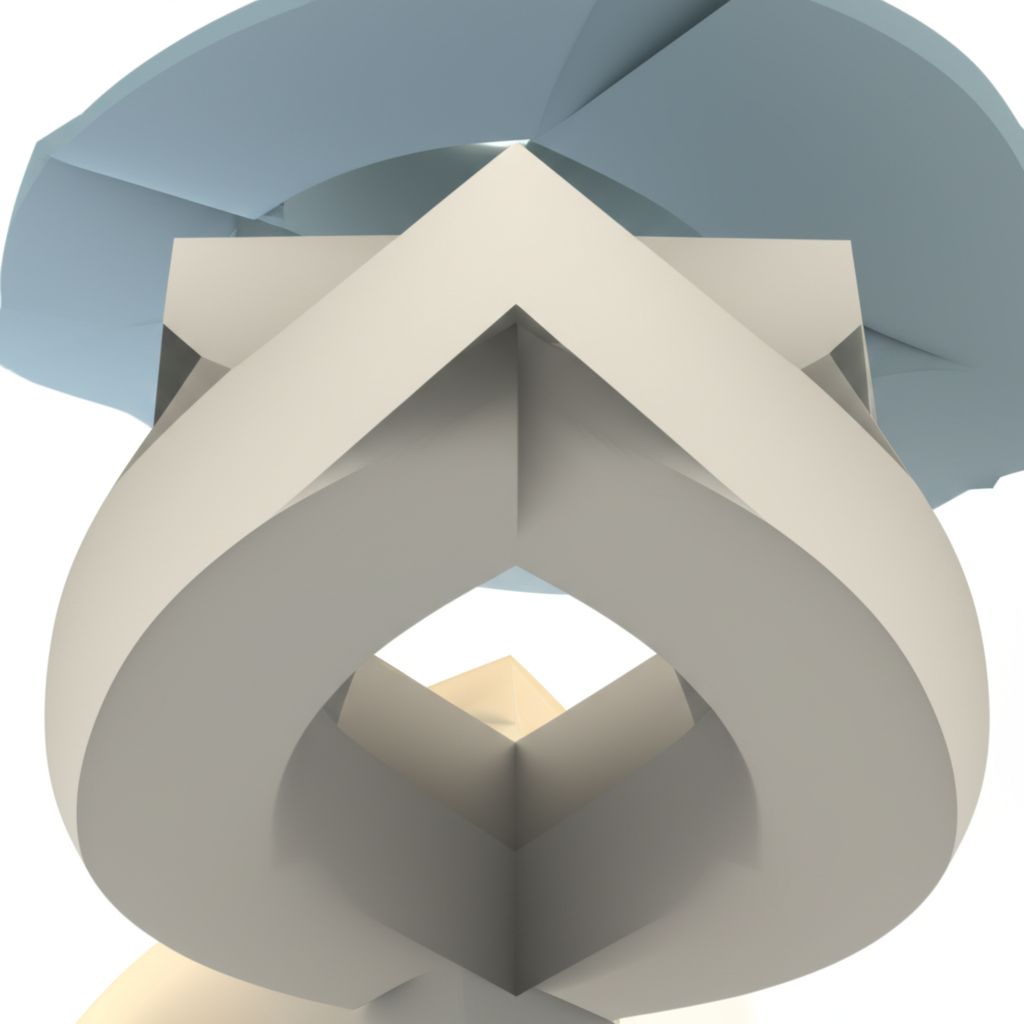
Plato's Forms and the Abstract Ideal
While Plato might have been wary of mimetic art, one could argue that abstract art offers a curious resonance with his theory of Forms. If beauty itself is a transcendent Form, an ideal concept existing independently of any particular beautiful object, then perhaps abstract art attempts to approach this Form more directly than representational art. Instead of depicting a beautiful flower (an imitation of the Form of a flower, which itself partakes in the Form of Beauty), abstract art might seek to embody the Form of Beauty through pure composition, color relationships, and structural harmony.
Consider the form of a perfect circle, or the golden ratio. These are abstract mathematical forms that often elicit a sense of beauty. Abstract art, by focusing on these fundamental elements – line, shape, color, texture – might be seen as an endeavor to manifest these pure, ideal forms directly, bypassing the need for a specific earthly referent. It aims for a beauty that is inherent in the form itself, rather than in what the form depicts.
The Viewer's Role: Subjectivity and Universal Appeal
The definition of beauty in abstract art is undeniably intertwined with the viewer's subjective experience. Without a clear subject, interpretation becomes paramount. However, this does not mean beauty is purely relative. While individual responses vary, there are often shared aesthetic experiences. The human mind seeks pattern, balance, rhythm, and contrast. These are universal principles of form that abstract art manipulates with great skill.
Abstract art invites a deeper engagement, a more active participation from the viewer. It asks us to bring our own emotions, memories, and intellectual frameworks to the encounter. The beauty emerges not just from the canvas, but from the dynamic interaction between the artwork's forms and the observer's inner landscape.
Here are some ways abstract art can evoke beauty:
- Purity of Form: The intrinsic elegance of lines, shapes, and their spatial relationships.
- Color Harmony & Contrast: The evocative power of color combinations and their emotional impact.
- Texture and Materiality: The tactile qualities of the medium, adding depth and sensory richness.
- Rhythm and Movement: The dynamic flow or tension created by the arrangement of elements.
- Emotional Resonance: The ability to convey profound feelings or states of mind without explicit narrative.
- Intellectual Stimulation: Challenging perceptions and encouraging new ways of seeing and thinking.
Conclusion: A Broader Definition of Beauty
Ultimately, defining beauty in abstract art is not about abandoning previous understandings, but about expanding them. Abstract art forces us to consider that beauty is not solely dependent on accurate representation or classical ideals. Instead, it can reside in the raw, unadulterated form itself – in the intricate dance of lines, the profound depth of color, the subtle balance of composition.
By engaging with abstract art, we are compelled to look inward, to trust our intuitive aesthetic responses, and to recognize that beauty can be an encounter with pure sensation, emotion, and intellect, unfettered by the demands of narrative or depiction. It is a testament to the enduring human capacity to find profound aesthetic value in the fundamental elements of existence, pushing the boundaries of what art can be and, in doing so, enriching our very definition of beauty.
YouTube Video Suggestions:
-
📹 Related Video: KANT ON: What is Enlightenment?
Video by: The School of Life
💡 Want different videos? Search YouTube for: ""Kant Critique of Judgment Abstract Art Explained""
2. ## 📹 Related Video: PLATO ON: The Allegory of the Cave
Video by: The School of Life
💡 Want different videos? Search YouTube for: ""Plato Theory of Forms and Abstract Art""