

Defining Beauty in Abstract Art: A Philosophical Inquiry
The quest to define Beauty has captivated philosophers for millennia, from the ancient Greeks contemplating ideal Form to modern thinkers grappling with the subjective nature of aesthetic experience. Yet, few domains challenge our established notions quite like Abstract Art. Stripped of recognizable subjects, it forces us to reconsider where Beauty resides, demanding a re-evaluation of Art itself and the very Definition of aesthetic pleasure. This article delves into how we might define beauty in a realm that often defies conventional aesthetic criteria, drawing upon philosophical insights to navigate its complex landscape.
The Elusive Nature of Beauty: From Plato to Pollock
For centuries, the Definition of Beauty in Art was often tied to mimesis – the faithful representation of nature or human ideals. Plato, in works like The Symposium and Phaedrus, spoke of an ultimate, transcendent Form of Beauty, of which earthly beautiful things are but imperfect reflections. Aristotle, while more grounded, emphasized order, symmetry, and magnitude as essential components of beauty, particularly in his Poetics when discussing tragic Art. These classical perspectives provided a framework where beauty was often objective, measurable, and intrinsically linked to harmonious Form and proportion.
However, the advent of Abstract Art in the early 20th century shattered these traditional paradigms. Artists like Wassily Kandinsky, Piet Mondrian, and Jackson Pollock moved beyond representation, focusing instead on color, line, shape, and texture as ends in themselves. This shift forces a crucial question: If Beauty is no longer found in the imitation of a beautiful subject, where do we locate it? Is it in the artist's expression, the viewer's perception, or an inherent quality of the non-representational Form itself? The challenge lies in expanding our Definition of Beauty to accommodate an Art form that operates on entirely different principles.
Abstract Art and the Redefinition of Form
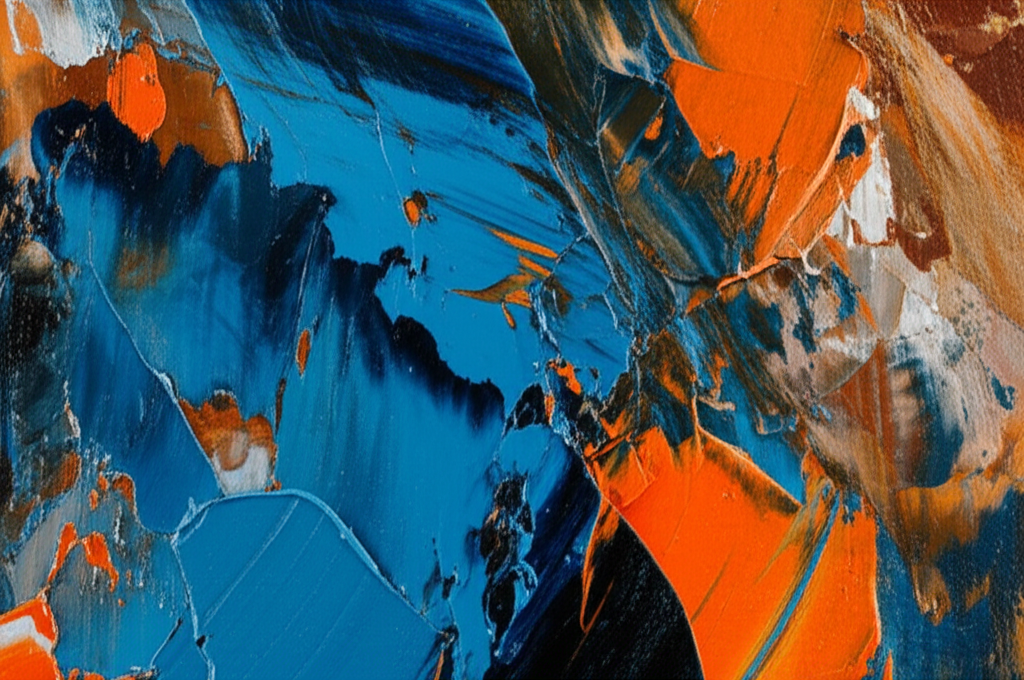
In Abstract Art, the traditional Form of recognizable objects gives way to pure visual elements. Here, Beauty often emerges from the interplay of these fundamental components. The harmonious (or deliberately dissonant) arrangement of colors, the dynamic tension of lines, the tactile quality of textures, and the overall composition become the primary carriers of aesthetic value.
Consider the following aspects where Form redefines Beauty in abstract works:
- Color as Emotion: Rather than depicting the color of an object, abstract artists use color to evoke mood, energy, or spiritual resonance. A vibrant red might convey passion, while a serene blue suggests tranquility, independent of any narrative.
- Line and Shape as Structure: Lines can create rhythm, direction, or enclosure. Shapes, whether geometric or organic, establish balance, contrast, or movement. The inherent Form created by these elements can be beautiful in its pure visual logic or expressive power.
- Texture and Materiality: The physical surface of an abstract painting – thick impasto, smooth glazes, collaged elements – adds another dimension of Form. This tactile quality can engage the viewer on a primal level, contributing to the overall aesthetic experience.
- Compositional Balance: Even without a subject, abstract works often exhibit a profound sense of balance or deliberate imbalance. The distribution of visual weight, positive and negative space, and the flow of elements can create a compelling and beautiful visual order, echoing Aristotle's emphasis on order, albeit in a new guise.
The Viewer's Role: A Dialogue with Abstract Beauty
Perhaps the most significant shift in defining Beauty in Abstract Art lies in the heightened role of the viewer. Without a pre-defined narrative or subject, the viewer is invited, even compelled, to engage actively with the Art. This engagement can be deeply personal, subjective, and intellectual.
Immanuel Kant, in his Critique of Judgment, discussed "disinterested pleasure" – the appreciation of an object's Form for its own sake, without practical interest or conceptual knowledge. This concept is particularly apt for Abstract Art. When confronting a Rothko color field or a Mondrian grid, we are not looking for recognition, but for an experience. Beauty here might stem from:
- Emotional Resonance: The Art evokes a feeling, a memory, or an internal state that resonates with the viewer.
- Intellectual Stimulation: The composition prompts contemplation on balance, movement, or the very nature of visual perception.
- Sensory Pleasure: The pure visual experience of color, line, and texture provides a direct, unmediated delight.
- The Unveiling of Pure Form: For some, abstract Art offers a glimpse into fundamental structures or universal patterns, echoing Plato's pursuit of ideal Forms, but through a modern lens.
Ultimately, defining Beauty in Abstract Art is not about finding a single, universal Definition, but about understanding the myriad ways in which Form can communicate, evoke, and inspire. It is a testament to the expansive power of Art to transcend representation and speak directly to our senses, emotions, and intellect. The Beauty lies not just in what is seen, but in the profound dialogue between the artwork and the beholder.
Approaches to Appreciating Beauty in Abstract Art
| Approach | Description | Philosophical Link |
|---|---|---|
| Sensory Immersion | Focus on the immediate visual experience: the vibrancy of colors, the movement of lines, the texture of the surface. Allow the Art to wash over your senses without seeking meaning. | Kant's "disinterested pleasure" – appreciating pure Form for its own sake. |
| Emotional Response | Identify the feelings or moods evoked by the artwork. Does it feel chaotic, serene, energetic, or contemplative? Beauty here is tied to the emotional impact. | Romantic aesthetics, where Art serves to express and evoke strong emotions. |
| Formal Analysis | Examine the composition: how elements like line, shape, color, and space interact. Look for balance, tension, rhythm, and unity. Beauty is found in the internal logic and structure of the Form. | Aristotle's emphasis on order, symmetry, and magnitude, applied to non-representational elements. |
| Intellectual Engagement | Consider the artist's intent (if known) or the philosophical questions the Art raises about perception, reality, or the nature of Art itself. Beauty emerges from the thought-provoking nature of the piece. | Platonic pursuit of ideal Forms or intellectual understanding, even if the "ideal" is now abstract. |
| Personal Connection | Allow your own experiences, memories, and interpretations to shape your appreciation. Beauty becomes a subjective dialogue between the viewer and the artwork. | Subjectivist theories of Beauty, where "beauty is in the eye of the beholder," but with an active, rather than passive, role for the beholder. |
In conclusion, defining Beauty in Abstract Art is less about a fixed Definition and more about an expanded understanding. It challenges us to look beyond representation, to appreciate Form in its purest manifestations, and to recognize the profound Beauty that can emerge from the interplay of color, line, and texture. It is a testament to the enduring power of Art to push boundaries and continually redefine our aesthetic sensibilities.
YouTube Video Suggestions:
-
📹 Related Video: What is Philosophy?
Video by: The School of Life
💡 Want different videos? Search YouTube for: "The Philosophy of Abstract Art"
2. ## 📹 Related Video: KANT ON: What is Enlightenment?
Video by: The School of Life
💡 Want different videos? Search YouTube for: "Kant's Aesthetics and Disinterested Pleasure Explained"