

Defining Beauty in Abstract Art
The Elusive Canvas: Reimagining Beauty Beyond Representation
Summary: This article delves into the complex yet captivating challenge of defining beauty within the realm of abstract art. Moving beyond traditional notions of mimetic representation, we explore how abstract art compels us to redefine beauty through the appreciation of pure form, composition, emotional resonance, and intellectual engagement. It argues that beauty in abstraction is not merely perceived but actively constructed by the viewer, drawing upon fundamental philosophical inquiries into aesthetics and perception that resonate through the Great Books of the Western World.
The Enduring Question of Beauty
For millennia, philosophers and artists alike have grappled with the definition of beauty. From Plato's ideal forms to Aristotle's emphasis on order and proportion, and later, Kant's exploration of disinterested judgment, the concept has been a cornerstone of aesthetic inquiry. Yet, with the advent of abstract art in the early 20th century, the traditional metrics for evaluating beauty were profoundly disrupted. How do we find beauty in a canvas devoid of recognizable objects, landscapes, or figures? This question is not merely academic; it forces a fundamental re-evaluation of what art is and how it communicates.
Abstract art represents a radical departure from the mimetic tradition that dominated Western art for centuries. No longer bound by the imperative to accurately depict reality, artists like Wassily Kandinsky, Piet Mondrian, and Jackson Pollock sought to express inner worlds, spiritual truths, or the intrinsic qualities of paint and canvas itself. This paradigm shift necessitated a new lens through which to perceive, and crucially, to define beauty.
Beauty's New Language: Form, Color, and Composition
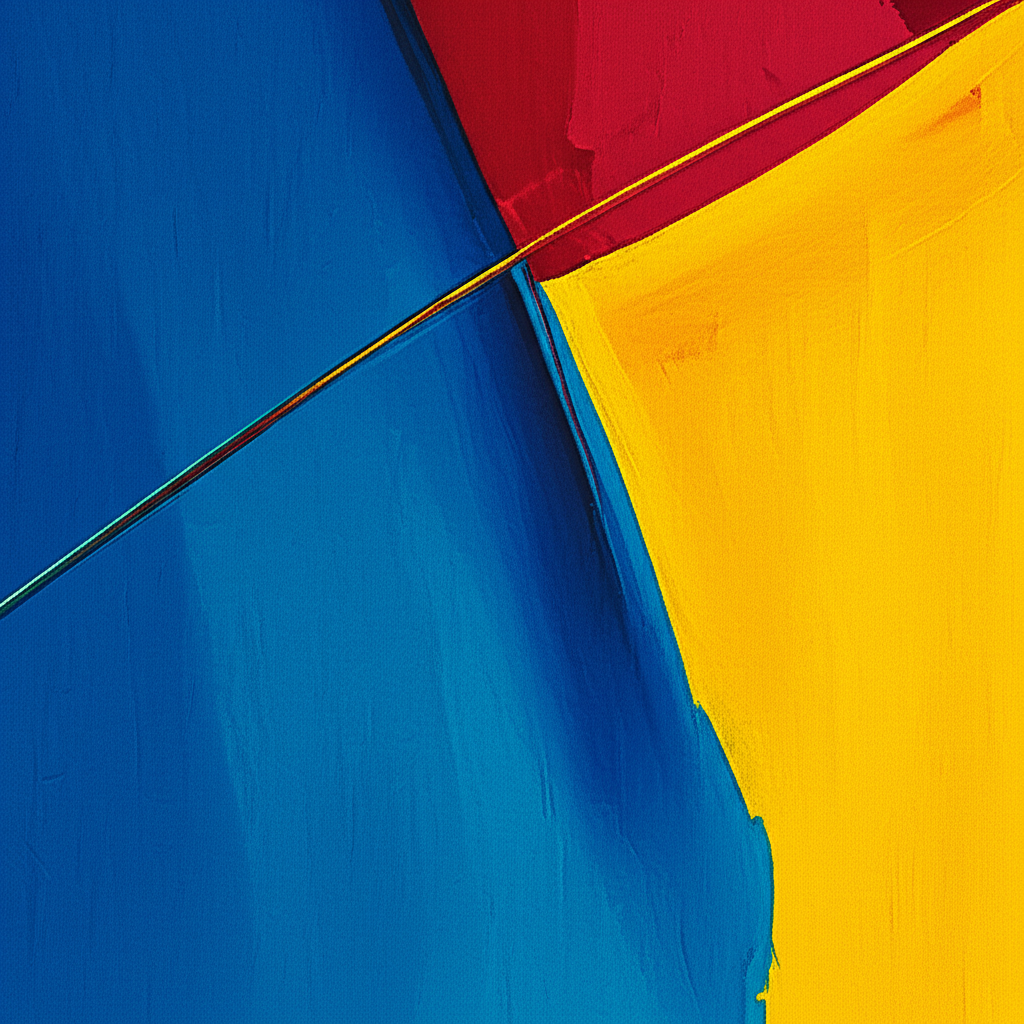
In abstract art, beauty often resides in the fundamental elements of visual form: line, color, shape, texture, and composition. When the subject matter vanishes, these elements step forward, becoming the primary carriers of aesthetic value.
- Line: Can convey energy, tension, serenity, or chaos.
- Color: Evokes emotion, creates depth, or establishes rhythm.
- Shape: From organic fluidity to geometric precision, shapes create structure and movement.
- Texture: Adds a tactile dimension, inviting a different kind of engagement.
- Composition: The arrangement of these elements, creating balance, imbalance, harmony, or dissonance.
Consider the intricate dance of colors in a Rothko, the dynamic lines in a Kandinsky, or the precise geometry of a Mondrian. Here, beauty is not in what is represented, but in how these elements interact, creating a visual language that speaks directly to our senses and intellect. This emphasis on pure form echoes ancient philosophical inquiries into the inherent beauty of geometric shapes and harmonious proportions, albeit applied in a radically new context. The definition of beauty expands to encompass the intrinsic aesthetic qualities of these foundational artistic components.
Beyond the Visual: Emotion and Intellect
The beauty of abstract art is not solely a visual phenomenon; it is deeply intertwined with the emotional and intellectual responses it elicits.
Dimensions of Beauty in Abstract Art
| Dimension | Description | Philosophical Link (Great Books) |
|---|---|---|
| Sensory Pleasure | The direct, unmediated delight derived from colors, textures, and lines. | Aristotle's pleasure in imitation and form; Kant's "disinterested pleasure." |
| Emotional Resonance | The capacity of the art to evoke feelings – joy, melancholy, awe, tranquility – without narrative. | Longinus's "sublime," evoking powerful emotions; Hegel's art as sensuous expression of spirit. |
| Intellectual Engagement | The stimulation of thought, prompting reflection on form, meaning, or the nature of art itself. | Plato's pursuit of ideal forms; Kant's faculty of judgment; philosophical definition of art. |
| Harmony & Balance | The internal coherence and equilibrium (or deliberate disequilibrium) of the composition. | Pythagorean and Platonic emphasis on mathematical harmony; Aristotle's order. |
| Originality & Innovation | The aesthetic value derived from the art's novelty, its challenge to established conventions. | The unfolding of art history as a dialectical process (Hegel). |
Abstract art often bypasses the rational mind to speak directly to our emotions. A vibrant splash of color can convey exhilaration, while muted tones might evoke introspection. This immediate, non-representational emotional impact challenges us to consider beauty as an experience rather than a mere recognition of something familiar.
Furthermore, abstract art demands intellectual engagement. It often asks the viewer to participate in the creation of meaning, to ponder the artist's intent, the relationship between elements, or the very definition of art. This active participation transforms passive viewing into a dynamic, interpretive process, where the beauty of the piece is co-created in the dialogue between the artwork and the observer.
The Viewer as Co-Creator of Beauty
One of the most profound shifts brought about by abstract art is the elevated role of the viewer. Unlike representational art, where the artist often dictates the subject and narrative, abstract art opens up a vast space for individual interpretation. The beauty of an abstract piece can be deeply personal, residing in the unique connections and associations a viewer brings to it.
This subjective dimension does not negate an objective basis for beauty entirely, but rather enriches its definition. A piece might possess inherent qualities of form and composition that are widely appreciated (an echo of Aristotle's universal principles of order), but its ultimate beauty is often actualized in the subjective experience of the individual. This interplay between objective aesthetic principles and subjective appreciation is a recurring theme in philosophical aesthetics, particularly in Kant's exploration of aesthetic judgment.
Conclusion: An Ever-Expanding Definition
Defining beauty in abstract art is not about finding a single, static answer, but rather embracing an expanded, more fluid definition. It is a journey from the outer world of representation to the inner world of form, emotion, and intellect. Beauty in abstraction is found in:
- The intrinsic harmony or tension of its elemental forms.
- Its capacity to evoke profound, non-narrative emotions.
- Its power to stimulate intellectual curiosity and personal reflection.
- The active participation it demands from the viewer, making them an integral part of the aesthetic experience.
By stripping away the familiar, abstract art compels us to look deeper, to feel more keenly, and to think differently about what constitutes beauty. It reminds us that art is not merely a mirror of reality, but a window into new ways of seeing, understanding, and experiencing the world – and ourselves. This ongoing quest to understand beauty in its myriad manifestations is a testament to the enduring power of both art and philosophy.
YouTube Video Suggestions:
-
📹 Related Video: What is Philosophy?
Video by: The School of Life
💡 Want different videos? Search YouTube for: ""The Philosophy of Abstract Art" or "What is Abstract Art Philosophy""
2. ## 📹 Related Video: KANT ON: What is Enlightenment?
Video by: The School of Life
💡 Want different videos? Search YouTube for: ""Kant's Aesthetics and the Sublime Explained""