

The Unseen Architects of Home: Custom and Convention in Family Life
The family, in its myriad forms, remains the bedrock of human society. Yet, its very structure, its daily rhythms, and its deepest meanings are not merely spontaneous expressions of affection or biological necessity. Rather, they are profoundly shaped by two powerful, often invisible forces: custom and convention. This exploration delves into how these forces, from the intimate rituals of the home to the overarching decrees of the State, define, constrain, and evolve the most fundamental unit of human association, ultimately influencing the very nature of the Citizen. We will journey through the philosophical insights of the Great Books, uncovering the enduring debates about the family's role in shaping individuals and society itself.
The Enduring Fabric of Family Life: An Introduction
To speak of family life is to speak of a tapestry woven from countless threads of shared experience, inherited wisdom, and societal expectation. At the heart of this intricate design lie custom and convention. These are not merely academic distinctions but lived realities that dictate everything from how we celebrate holidays to how we structure our legal unions. They are the unspoken rules and the explicit laws that govern the domestic sphere, acting as the primary agents in our initial formation as individuals and, subsequently, as members of a broader State. Understanding their interplay is crucial for grasping the philosophical underpinnings of our personal and political lives.
Defining the Invisible Hand: Custom vs. Convention
Before we delve deeper, it's vital to delineate these two pervasive forces. While often used interchangeably, custom and convention possess distinct characteristics that reveal their unique influence on the family unit.
Table 1: Custom vs. Convention
| Feature | Custom | Convention |
|---|---|---|
| Nature | Unwritten, informal, traditional | Written or unwritten, formal or informal, often agreed-upon |
| Origin | Emerges organically from historical practice, shared values, community | Established by agreement, law, or widespread societal acceptance |
| Transmission | Passed down through generations, observation, upbringing | Taught explicitly, codified, enforced by social pressure or legal means |
| Authority | Moral weight, tradition, social expectation | Legal mandate, social norm, practical necessity |
| Flexibility | Slow to change, deeply ingrained | Can change more rapidly, subject to reform or redefinition |
| Examples | Family rituals, specific moral teachings, holiday traditions, communication styles | Marriage laws, educational requirements, gender roles, societal expectations for child-rearing |
Custom represents the deeply ingrained practices and beliefs passed down through generations, often without explicit articulation. Think of the specific way your family celebrates a birthday, the unspoken rules about table manners, or the traditional roles assigned within the household. These are the inherited patterns that give family life its unique texture and continuity.
Convention, on the other hand, refers to more explicit agreements, societal norms, or legal frameworks that dictate behavior. While some conventions are informal (like the expectation of politeness), many are codified into law, such as marriage certificates, laws regarding child custody, or compulsory education. Conventions are often the external structures that provide a framework for family existence within the larger State.
The Family as the Cradle of Custom
From the earliest moments of life, the family serves as the primary conduit for the transmission of custom. It is within the intimate confines of the household that an individual first encounters the world's rhythms, values, and expectations. Aristotle, in his Politics, recognized the oikos (household) as the fundamental unit, the "first association" from which the village and, ultimately, the polis (city-state) naturally emerge. He viewed the household as the place where the basic necessities of life are met and where the young are first educated in virtue and practical wisdom.
- Moral Formation: Family customs instill a sense of right and wrong, often long before formal schooling begins. The way parents resolve conflicts, demonstrate empathy, or uphold promises forms a child's foundational moral compass.
- Identity and Belonging: Shared customs – from specific recipes to storytelling traditions – create a collective identity, fostering a sense of belonging and continuity across generations. They root individuals in a particular heritage.
- Socialization: The family teaches the unwritten rules of social interaction, preparing individuals for their roles within wider society. How one addresses elders, shares resources, or expresses emotions are all custom-bound lessons.
These customs, though often invisible, are the very threads that bind a family together, providing stability, predictability, and a shared understanding of the world. They are the "unseen architects" shaping the nascent Citizen.
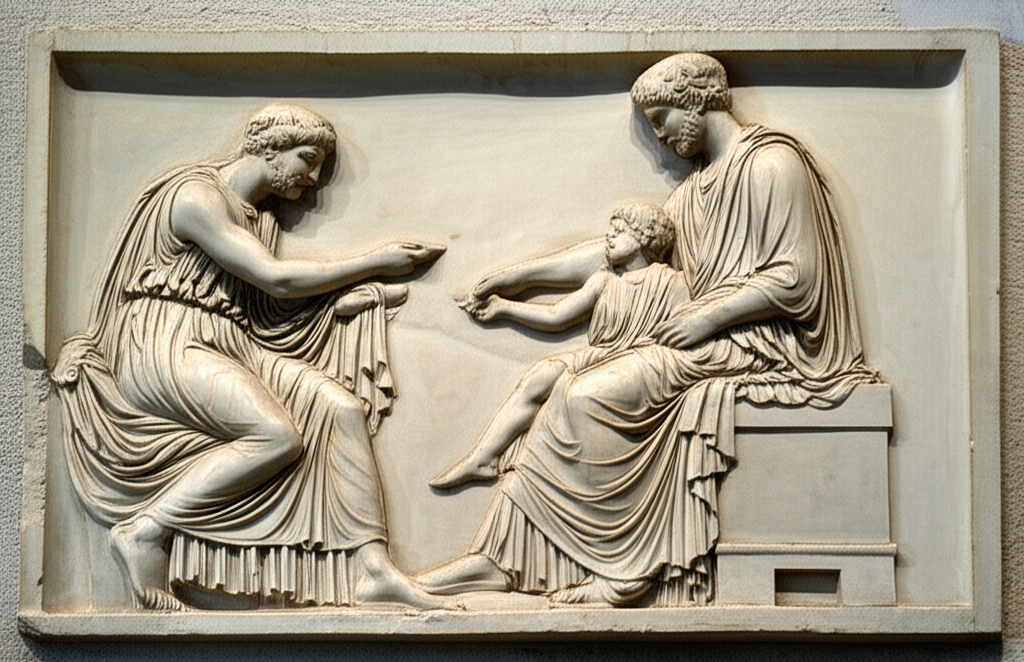
Convention's Role in Shaping the Modern Family
While custom provides the internal coherence, convention often dictates the external form and legal standing of the family unit within the larger State. As societies grow more complex, the need for explicit rules and agreed-upon norms becomes paramount.
- Legal Frameworks: The most obvious impact of convention is seen in legal structures. Marriage, historically a custom-bound union, has become a legally defined convention with specific rights and responsibilities. Laws governing divorce, child custody, inheritance, and adoption all represent the State's formalization of family relationships. John Locke, in his Two Treatises of Government, discussed the power of parents and the natural liberty of children, laying groundwork for how the State eventually formalizes these relationships and responsibilities.
- Societal Norms: Beyond laws, broader societal conventions influence family life. Expectations regarding gender roles within the household, the appropriate age for marriage, educational aspirations for children, and even work-life balance are all products of prevailing conventions. These can shift dramatically over time, reflecting changes in cultural values and economic realities.
- The Evolving Family: Modern conventions are constantly adapting to changing social landscapes. The recognition of diverse family structures, such as same-sex partnerships, blended families, and single-parent households, reflects an ongoing redefinition of what constitutes a "family" in the eyes of the State and society.
These conventions, whether enshrined in law or simply widely accepted, provide the external scaffolding that supports and regulates the family, ensuring its integration into the broader social fabric.
The Interplay: Family, Citizen, and State
The relationship between Custom and Convention in family life is not merely an internal affair; it is deeply intertwined with the formation of the Citizen and the stability of the State. The family serves as the primary training ground for civic life.
- From Household to Polis: Aristotle argued that a well-ordered household is a prerequisite for a well-ordered polis. The virtues learned within the family – self-control, justice, responsibility – are essential for effective citizenship. Family customs, therefore, are not just personal; they have civic implications.
- The State's Interest in the Family: The State has a vested interest in the nature of family life. It relies on families to socialize new members, instill civic values, and produce productive Citizens. This is why states often regulate family matters, from education to welfare. Plato, in his Republic, even proposed radical changes to traditional family structures for his guardian class, suggesting communal child-rearing to ensure ultimate loyalty to the State over private family bonds – a powerful example of the State attempting to re-engineer family conventions for its own ends.
- Tension and Balance: There is often a tension between the autonomy of individual families to perpetuate their customs and the State's need to impose universal conventions for the common good. Issues like mandatory schooling, child protection laws, or vaccination policies illustrate how the State can override familial customs in the name of broader societal welfare, highlighting the ongoing negotiation between private life and public good. This negotiation is at the heart of much political philosophy, from Hobbes's need for a strong sovereign to Locke's emphasis on individual rights.
Challenges and Transformations: Custom and Convention in Flux
The modern era, characterized by rapid technological advancement, globalization, and cultural exchange, presents significant challenges and opportunities for custom and convention in family life.
- Erosion of Traditional Customs: Global media, migration, and the dissolution of tight-knit communities can weaken traditional family customs. Younger generations may embrace new practices, leading to a disconnect between inherited ways and contemporary realities.
- Emergence of New Conventions: The digital age has introduced new conventions, from "screen time" rules to virtual family gatherings. Economic shifts have led to new conventions around work-life balance, parental leave, and dual-income households.
- Philosophical Implications: These transformations compel us to critically examine the purpose and value of both custom and convention. Are we losing valuable traditions, or are we liberating ourselves from outdated constraints? How do we balance the need for stability and continuity with the imperative for adaptation and progress? The philosophical task is to discern which customs and conventions serve human flourishing and which merely perpetuate inertia or injustice.
Navigating the Ethical Landscape: A Planksip Perspective
At planksip.org, we believe in the power of philosophical inquiry to illuminate the complexities of human existence. The dynamic interplay of Custom and Convention in family life is a fertile ground for such exploration. It forces us to ask fundamental questions:
- What constitutes a "good" family life, and who defines it?
- To what extent should the State intervene in the private sphere of the family?
- How do we honor the wisdom of tradition while embracing necessary change?
- What responsibilities do Citizens have to their families, and to the wider community and State?
By engaging with these questions, drawing upon the insights of the Great Books, and reflecting on our own experiences, we can cultivate a deeper understanding of the forces that shape our most intimate relationships and, by extension, our society. The family, in its capacity as the crucible of custom and the subject of convention, remains the vital starting point for any profound philosophical reflection on human nature and the just society.
YouTube Video Suggestions:
-
📹 Related Video: ARISTOTLE ON: The Nicomachean Ethics
Video by: The School of Life
💡 Want different videos? Search YouTube for: "Aristotle Politics family household oikos"
2. ## 📹 Related Video: PLATO ON: The Allegory of the Cave
Video by: The School of Life
💡 Want different videos? Search YouTube for: "Plato Republic family state citizenship"