

Custom and Convention in Family Life: A Philosophical Inquiry
The Unseen Architectures of Our Earliest Societies
From the moment we draw breath, we are immersed in a world shaped by custom and convention. Nowhere are these forces more potent, more foundational, than within the crucible of family life. This pillar page delves into the philosophical underpinnings of these invisible architectures, exploring how inherited traditions and agreed-upon norms define, sustain, and sometimes constrain the most intimate of human relationships. We will navigate the rich intellectual landscape of the Great Books of the Western World to understand how thinkers have grappled with the family as the primary arena where the individual citizen first encounters the dictates of society, often long before the direct influence of the State becomes explicit. Understanding these dynamics is not merely an academic exercise; it is an examination of the very fabric of our being, our belonging, and our collective future.
Defining the Terms: Custom, Convention, and the Family Unit
Before we can dissect their interplay, a clear understanding of our core concepts is essential.
Custom: The Unwritten Laws of Kinship
Custom refers to the long-established practices, beliefs, and traditions that are passed down through generations, often without explicit articulation or formal enforcement. They are the how we do things here of a particular group, often deeply ingrained and felt as natural or self-evident. In family life, customs might include:
- Rituals: Holiday celebrations, rites of passage (birthdays, coming-of-age), mealtime routines.
- Roles: Traditional divisions of labor, gender expectations, deference to elders.
- Values: Implicit moral codes, ethical frameworks for interaction, expectations of loyalty or support.
Customs are powerful precisely because they are often unquestioned. They form the bedrock of identity and provide a sense of continuity and belonging.
Convention: The Agreed-Upon Frameworks
Convention, while often overlapping with custom, implies a more conscious, even if tacit, agreement on rules or principles. These are the norms that society (or a family unit within it) agrees to abide by for the sake of order, cooperation, or mutual benefit. While customs are inherited, conventions can be established, challenged, and even changed.
- Social Contracts: Implicit agreements on how members interact, resolve conflict, or share resources.
- Legal Frameworks: Marriage laws, inheritance rules, parental rights and responsibilities as defined by the State.
- Educational Practices: Agreed-upon methods for raising children, disciplinary approaches, or educational priorities.
Conventions often bridge the gap between individual family units and the broader societal expectations, acting as a crucial link between the private sphere of the family and the public sphere of the citizen and the State.
The Family: A Dynamic Entity
The family itself is a concept shaped profoundly by both custom and convention. While often thought of as a biological unit, its definition, structure, and function have varied dramatically across cultures and historical epochs. For our purposes, we consider the family as the primary social unit responsible for reproduction, socialization, and the initial formation of the individual citizen.
Philosophical Lenses: The Great Books on Family, Custom, and Convention
The thinkers of the Great Books of the Western World have consistently recognized the profound significance of the family as the foundational unit of society. Their insights illuminate the enduring tension between the organic development of custom and the deliberate construction of convention.
Ancient Foundations: Plato and Aristotle
Plato, in his Republic, famously challenges traditional family structures, proposing a communal upbringing for the guardian class. His radical ideas were a direct critique of the customary Athenian family, suggesting that convention (a state-controlled system) could better serve the interests of the polis by ensuring loyalty to the State above private affections. For Plato, the individual citizen was ultimately a ward of the state, and family customs could be a divisive force.
Aristotle, in contrast, in his Politics, views the family (oikos) as the natural and necessary precursor to the village and then the State. He argues that the household is the first community, where individuals learn the virtues of ruling and being ruled. For Aristotle, custom within the family — the natural hierarchy of husband and wife, parent and child, master and slave — provides the essential training ground for the citizen to participate in the larger political community. He saw these customs as largely natural, evolving from human needs and contributing to the good life.
| Philosopher | View on Family Structure | Role of Custom/Convention | Relationship to State |
|---|---|---|---|
| Plato | Communal (for guardians) | Convention (state-imposed) | State over family |
| Aristotle | Natural, hierarchical | Custom (natural evolution) | Family as foundation |
The Enlightenment and Beyond: Locke, Rousseau, and the Social Contract
The Enlightenment era brought a new focus on individual rights and the origins of political society, profoundly influencing how philosophers viewed the family.
John Locke, in his Two Treatises of Government, argues against patriarchal power as the basis for political authority. While acknowledging the natural authority of parents over children (a custom based on protection and education), he asserts that this authority is temporary and distinct from the power of the State. For Locke, individuals consent to conventions that form civil society, and the family unit, while crucial for raising future citizens, does not inherently dictate the structure of government. His work highlights the move from inherited custom to deliberate convention in the political sphere, even as family life retains its customary elements.
Jean-Jacques Rousseau, particularly in Emile, or On Education and The Social Contract, explores the natural family as a temporary association based on need. He argues that the transition from natural liberty to civil liberty requires a social contract, a set of conventions that transform individuals into citizens of a moral and political State. Rousseau emphasizes the importance of education within the family to cultivate civic virtue, suggesting that the customs of family life should be aligned with the conventions necessary for a healthy republic. The family, for Rousseau, is the first school for the citizen, where the seeds of civic duty are sown through specific customs and educational conventions.
The Dynamic Interplay: Family, Citizen, and State
The relationship between custom and convention in family life is not static; it is a dynamic interplay that continually shapes and is shaped by the individual citizen and the overarching State.
How Custom Shapes the Citizen
The customs of a family are the first lessons in civics. They teach:
- Moral Frameworks: What is right and wrong, fair and unfair.
- Social Skills: Cooperation, conflict resolution, empathy.
- Identity: A sense of belonging, cultural heritage, and personal values.
These deeply ingrained customs form the psychological and moral foundation upon which an individual's identity as a citizen is built. A child raised in a family with strong customs of respect and responsibility is more likely to carry those virtues into their public life.
The State's Hand in Family Conventions
While customs often evolve organically, the State frequently intervenes to formalize, regulate, or even redefine family conventions. This can manifest in:
- Marriage Laws: Defining who can marry, the legal rights and responsibilities of spouses, and divorce procedures.
- Parental Rights and Responsibilities: Laws regarding child welfare, education, and legal guardianship.
- Social Welfare Policies: Support for families, parental leave, childcare provisions.
These state-imposed conventions can either reinforce existing customs or challenge them, reflecting the prevailing values and political ideologies of a society. For instance, the legal recognition of diverse family structures by the State represents a significant shift in convention, often preceding or responding to evolving social customs.
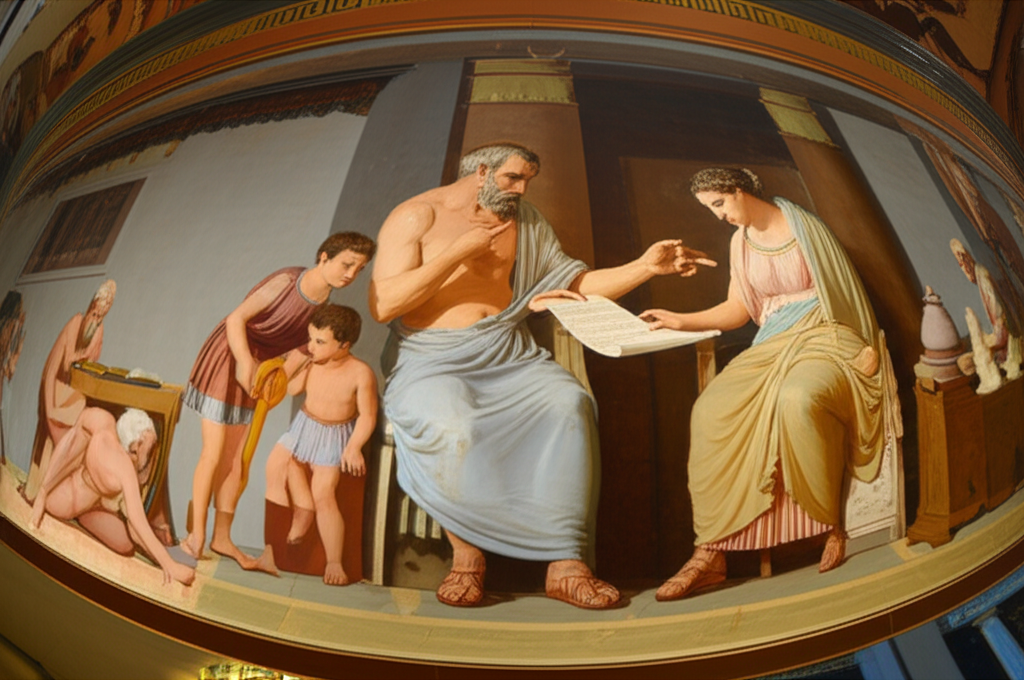
The Citizen as Agent of Change
It is crucial to remember that citizens are not merely passive recipients of customs and conventions. Through their choices, challenges, and collective actions, individuals can influence and reshape both. Social movements advocating for changes in family law, for example, demonstrate how citizens can push the State to adopt new conventions that better reflect evolving customs or moral principles. The ongoing evolution of family structures—from extended to nuclear, and now to diverse constellations of care—is a testament to this dynamic relationship.
Navigating Modernity: Challenges and Evolutions
In an increasingly globalized and individualized world, the interplay of custom and convention in family life faces unprecedented challenges.
- Globalization and Cultural Blending: Exposure to diverse customs can lead to a questioning of inherited family traditions, sometimes resulting in a rich synthesis, other times in cultural friction.
- Technological Impact: Digital communication and social media redefine family interactions, creating new conventions for connection and distance.
- Individualism vs. Collective Identity: Modern emphasis on individual autonomy can clash with traditional family customs that prioritize collective needs or hierarchical structures.
- State Intervention and Diversity: Modern states increasingly grapple with how to accommodate diverse family forms while ensuring the well-being of all citizens, leading to new legal and social conventions.
These challenges highlight the ongoing philosophical question: To what extent should family life be governed by unwritten customs, and to what extent by deliberate conventions, particularly those imposed or supported by the State? The answer remains a subject of continuous debate, reflecting the complex relationship between personal liberty, familial bonds, and civic responsibility.
Conclusion: The Enduring Significance
The exploration of custom and convention in family life reveals a profound philosophical landscape, one that has occupied the greatest minds of the Western tradition. From the ancient polis to the modern State, the family remains the fundamental arena where individuals are first initiated into the norms of society, where the seeds of the citizen are sown. While customs provide continuity and identity, conventions allow for adaptation and progress, bridging the gap between the intimate sphere of kinship and the broader demands of public life. Understanding this intricate dance is not just an academic pursuit; it is essential for comprehending the foundations of our societies, the evolution of human relationships, and the ongoing project of building a just and flourishing commonwealth.
Further Exploration
📹 Related Video: PLATO ON: The Allegory of the Cave
Video by: The School of Life
💡 Want different videos? Search YouTube for: ""Plato's Republic Family Structure Philosophy""
📹 Related Video: ARISTOTLE ON: The Nicomachean Ethics
Video by: The School of Life
💡 Want different videos? Search YouTube for: ""Aristotle Politics Family Household State""