

The Unseen Threads: Causality in Physics and Metaphysics
From the simplest flick of a domino to the grandest cosmic events, our world seems to operate on a fundamental principle: every effect has a cause. This seemingly intuitive notion, however, unravels into a tapestry of profound complexity when examined through the twin lenses of physics and metaphysics. This article delves into the intricate concept of causality, exploring its empirical manifestations within scientific inquiry and its deeper philosophical implications concerning necessity and contingency, inviting us to ponder whether cause and effect are objective truths of the universe or fundamental constructs of our understanding.
The Physical Perspective: Causality in the Observable Universe
In the realm of physics, causality is often treated as an observable, testable relationship. It forms the bedrock of scientific explanation, allowing us to predict, control, and understand natural phenomena.
Classical Determinism: A Clockwork Universe
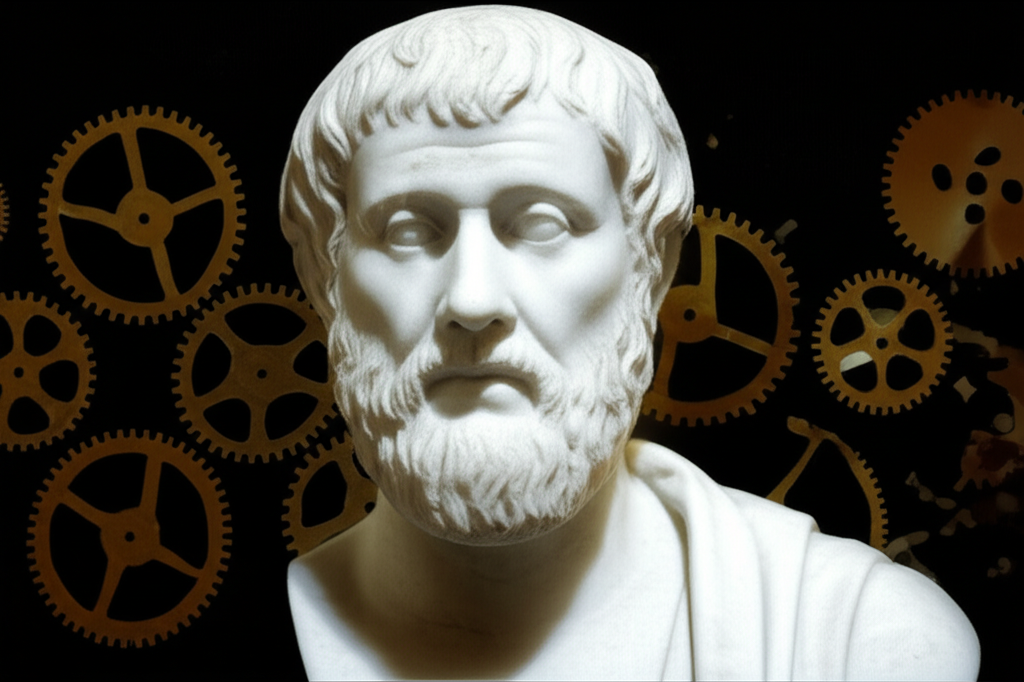
For centuries, classical physics, exemplified by Newton's laws, presented a highly deterministic view of causality. If we know the initial conditions and the forces at play, the future state of a system is, in principle, entirely predictable. A billiard ball striking another causes the second to move in a precise manner. This perspective suggests a linear, unbroken chain of events, where every event is the inevitable outcome of prior causes. The universe, in this view, functions like a grand, intricate clockwork mechanism, where every gear turn causes the next.
Modern Physics: Probability, Uncertainty, and the Quantum Realm
The advent of quantum mechanics, however, introduced a radical departure from this classical certainty. At the subatomic level, causality appears to be probabilistic rather than strictly deterministic. An electron's position or momentum cannot be simultaneously known with absolute precision, and its decay into other particles is governed by probabilities, not absolute necessity. This raises profound questions:
- Does a cause truly precede an effect in the same way at the quantum level?
- Is quantum randomness a fundamental aspect of reality, or merely a reflection of our incomplete understanding?
This shift challenges the notion of a strictly deterministic universe, introducing elements of contingency where outcomes are not always predetermined.
The Metaphysical Perspective: Beyond Empirical Observation
While physics seeks to describe how things happen, metaphysics delves into the deeper questions of why they happen, and what constitutes a cause in the first place. This philosophical inquiry often grapples with concepts that transcend empirical verification.
Ancient Roots: Aristotle's Four Causes
One of the most enduring contributions to the metaphysical understanding of causality comes from Aristotle, whose framework, explored extensively in the Great Books of the Western World, identified four distinct types of causes:
| Type of Cause | Description | Example (Sculpture) |
|---|---|---|
| Material Cause | That out of which something is made. | The bronze or marble from which the statue is crafted. |
| Formal Cause | The form or essence of a thing; its definition. | The design, shape, or idea of the statue in the artist's mind. |
| Efficient Cause | The primary source of the change or rest; the agent that brings it about. | The sculptor, their tools, and their actions. |
| Final Cause | The end, purpose, or goal for which a thing exists or is done. | The reason the statue was made (e.g., to honor a god, for aesthetic pleasure). |
Aristotle's framework highlights that understanding a phenomenon fully requires more than just identifying the initiating event (efficient cause); it demands grasping its purpose, form, and material composition.
The Problem of Induction and Hume's Skepticism
David Hume, another towering figure within the Great Books tradition, famously questioned the very foundation of our belief in causal necessity. He argued that we never actually observe the "necessary connection" between a cause and its effect. What we observe, he contended, is merely constant conjunction: one event (A) consistently followed by another (B). Our belief that A causes B is not derived from reason or observation of an inherent link, but from habit and custom. This radically skeptical view suggests that the future might not resemble the past, undermining the very predictive power we attribute to causality. For Hume, the necessity we perceive in cause and effect is a psychological projection, not an objective feature of reality.
Kant and the Categories of Understanding
Immanuel Kant, grappling with Hume's challenge, proposed a revolutionary solution. He argued that causality is not something we observe in the world, but rather a fundamental category of understanding that our minds impose upon sensory experience. For Kant, we cannot experience the world without organizing it causally. Therefore, causality is a necessary condition for human experience and knowledge, though it may not be an inherent property of "things-in-themselves." This perspective bridges the gap between empirical observation and metaphysical necessity, suggesting that the cause-effect relation is a structure of our cognition.
Necessity and Contingency: The Fabric of Existence
The distinction between necessity and contingency is central to the metaphysical debate on causality.
- Necessity refers to events or states of affairs that must be the case; they could not have been otherwise. If A necessarily causes B, then whenever A occurs, B must follow.
- Contingency refers to events or states of affairs that might or might not be; they could have been otherwise. A contingent event is one whose occurrence is not determined by an absolute necessity.
Are all physical events ultimately necessary, or is there genuine contingency in the universe? Quantum mechanics suggests the latter, while classical determinism leaned towards the former. Philosophers continue to debate whether the ultimate cause of the universe (if such a thing exists) is a necessary being or a contingent one, and what implications this has for free will and the nature of reality itself.
Bridging the Divide: Intersections and Ongoing Debates
The interplay between physics and metaphysics regarding causality is dynamic and ongoing. Physicists often implicitly rely on metaphysical assumptions about the uniformity of nature or the existence of an external reality governed by laws. Conversely, metaphysical theories must contend with the findings of modern physics, especially the challenges posed by quantum indeterminacy.
- The Arrow of Time: The concept of cause implies a directionality of time. Effects follow causes, never precede them. This "arrow of time" is a profound puzzle for both physicists (who find many fundamental laws time-symmetric) and metaphysicians (who ponder its ultimate source).
- Free Will vs. Determinism: If every event, including our decisions, is merely the effect of prior causes, then is free will an illusion? This ancient philosophical conundrum is continually re-examined in light of new scientific understanding.
- Emergent Causality: Can complex systems exhibit emergent causal properties that are not reducible to the causality of their individual components? This question is relevant in fields from biology to artificial intelligence.
Understanding causality requires a willingness to engage with both empirical data and abstract reasoning. It's a conversation that stretches from the precise measurements of the laboratory to the deepest reflections on existence itself, constantly challenging our assumptions about how the world works and our place within it.
Conclusion
The journey through causality reveals it to be far more than a simple linear connection. From the deterministic grandeur of classical physics to the probabilistic dance of quantum mechanics, and from Aristotle's ancient classifications to Hume's radical skepticism and Kant's transcendental insights, the concept of a cause remains central to our understanding of reality. The interplay between necessity and contingency continues to fuel philosophical and scientific inquiry, reminding us that the unseen threads connecting events are as much a product of our interpretation as they are an objective feature of the universe. As we continue to probe the depths of existence, the nature of causality stands as a testament to the enduring human quest for understanding.
📹 Related Video: ARISTOTLE ON: The Nicomachean Ethics
Video by: The School of Life
💡 Want different videos? Search YouTube for: ""Aristotle's Four Causes Explained Philosophy""
📹 Related Video: KANT ON: What is Enlightenment?
Video by: The School of Life
💡 Want different videos? Search YouTube for: ""Quantum Mechanics Causality and Determinism Debate""