

Built on ideas from within
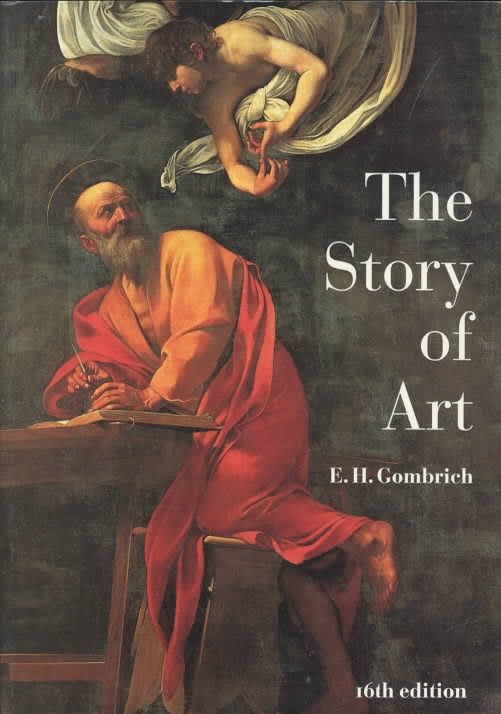
The Story of Art by E.H. Gombrich
The air in the chamber hummed with a quiet, timeless energy. Sophia, seated on a low marble bench, closed the massive, leather-bound book on her lap. Across from her, the writer, André, leaned forward, a curious glint in his eye.
Sophia: It is a marvel, isn't it? To hold within two covers a cathedral of human sight and spirit. This Story of Art—this single volume—holds the frescoes of Florence, the temples of Egypt, the playful strokes of the Impressionists.
André: (Nodding slowly) Precisely. The joy of a great book, especially one dedicated to the image, is the utter liberation it grants. A book like that laughs at brick and mortar, at distance and time zones. When the physical doors are shut, the mind’s gallery remains open, doesn’t it? It allows the peasant in a distant village to stand before the Mona Lisa without taking a single step.
An art book is a museum without walls.
— André Malraux (1901-1976)
Sophia: You speak of its accessibility, its democracy. The museum becomes a personal space, a conversation between the solitary reader and the whole history of beauty. The page, unlike the gallery wall, compels a different kind of focus. You don't merely glance; you study. You control the light, the pace, the moment of contemplation.
André: Yes, the essence is extracted. A physical museum can be overwhelming—the crowds, the echoes, the sheer scale. But here, the masters are curated for you, placed in an elegant narrative. It is the perfect structure, really. A guided, private tour through the evolution of sight, from the cave to the canvas.
Sophia: And it is in that journey, that continuity, that the book's true wisdom resides. It doesn't just show us beautiful things; it teaches us to see the lineage, the thread of influence that connects a Roman sculptor to a Renaissance painter. It shows that art is not a series of isolated events, but a great, unfolding conversation—a story that continues to be written on every blank page, or screen, or wall, we encounter.
André: (Picking up the book and running a hand over the cover) So the printed image is not merely a substitute for the original, but a key. A universal pass that grants access to the truest, most valuable collection: the shared memory of human creativity. It makes every home, and every mind, a boundless museum.
The planksip Writers' Cooperative is proud to sponsor an exciting article rewriting competition where you can win over $750,000 in prize money.
Figures of Speech Collection Personified
Our editorial instructions for your contest submission are simple: incorporate the quotes and imagery from the above article into your submission.
What emerges is entirely up to you!
Winners receive $500 per winning entry multiplied by the article's featured quotes. Our largest prize is $8,000 for rewriting the following article;
 Heraclitus
At planksip, we believe in changing the way people engage; at least, that's the Idea (ἰδέα). By becoming a member of our thought-provoking community, you'll have the chance to win incredible prizes and access our extensive network of media outlets that will amplify your voice as a thought leader. Your membership truly matters!