

Gazing into the Infinite: Astronomy and Our Grasp of Eternity
The relentless gaze upwards, characteristic of astronomy, has always been more than a scientific endeavor; it is a profound philosophical act. From the earliest stargazers to the modern astrophysicist, our contemplation of the cosmos inevitably leads us to confront the most elusive of concepts: eternity. This article explores how our evolving understanding of the universe, as revealed through astronomy, has shaped and challenged our perception of time, our place in the world, and the very nature of the infinite. It is in the vastness of space and the unimaginable spans of cosmic history that we find the most compelling provocations to ponder what lies beyond our temporal confines.
The Cosmic Mirror: Reflecting on Time and Existence
For millennia, humanity has looked to the heavens not just for navigation or agricultural cycles, but for answers to the deepest questions about existence. The predictable, yet awe-inspiring, movements of celestial bodies provided the first framework for understanding time. Day and night, the phases of the moon, the procession of the seasons – these were the initial markers that gave structure to our world. But beyond these immediate cycles, the unchanging patterns of the stars hinted at something more enduring, something that transcended human lifespans and even the histories of civilizations.
This early astronomy laid the groundwork for philosophical inquiries into eternity. Was the cosmos itself eternal, as many ancient thinkers pondered? Or did it have a beginning and an end, as some theological traditions proposed? These questions, deeply embedded in the "Great Books of the Western World," reveal a persistent human struggle to reconcile our finite experience with the seemingly infinite expanse above.
From Celestial Mechanics to Philosophical Metaphysics
The shift from mythological interpretations of the heavens to more rigorous astronomical observation profoundly influenced philosophical thought. Ancient Greek philosophers, drawing on meticulous observations, developed sophisticated cosmological models. Plato, for instance, in his Timaeus, describes the world as a created entity, yet one that strives for eternity through its cyclical motions, mirroring an eternal, unchanging realm of Forms. Aristotle, too, posited an eternal, ungenerated cosmos, driven by an unmoved mover, where celestial spheres moved in perfect, unending circles – a direct astronomical influence on his metaphysics of time and being.
These early conceptualizations of eternity were often tied to the perceived perfection and endless cycles of the celestial bodies. The very regularity of the heavens suggested a timeless order, a realm where change, decay, and finitude were absent.
Ancient Perspectives on Cosmic Eternity
- Plato's Cosmos: The sensible world as an imperfect copy of an eternal realm, striving for eternity through cyclical motion.
- Aristotle's Unmoved Mover: A concept tied to an eternal, ungenerated cosmos and the perpetual, perfect motion of celestial spheres.
- Stoic Recurrence: The idea of an eternal world that undergoes periodic destruction and recreation, repeating the same events in an endless cycle.
The Modern Universe: A Canvas of Immeasurable Time
Modern astronomy, powered by telescopes and advanced physics, has unveiled a universe far grander and more dynamic than our ancestors could have imagined. Discoveries like the Big Bang, the expansion of the universe, the life cycles of stars, and the vast distances to galaxies have radically reshaped our understanding of cosmic time. We now speak of billions of years for stellar evolution, and over 13.8 billion years for the universe's existence. These scales dwarf human comprehension, forcing us to redefine our relationship with eternity.
The universe's immense age and ongoing evolution present a different kind of eternity – one that is not static or perfectly cyclical, but rather a continuous unfolding within an unimaginably vast temporal framework. The world we inhabit is but a fleeting moment in this cosmic drama.
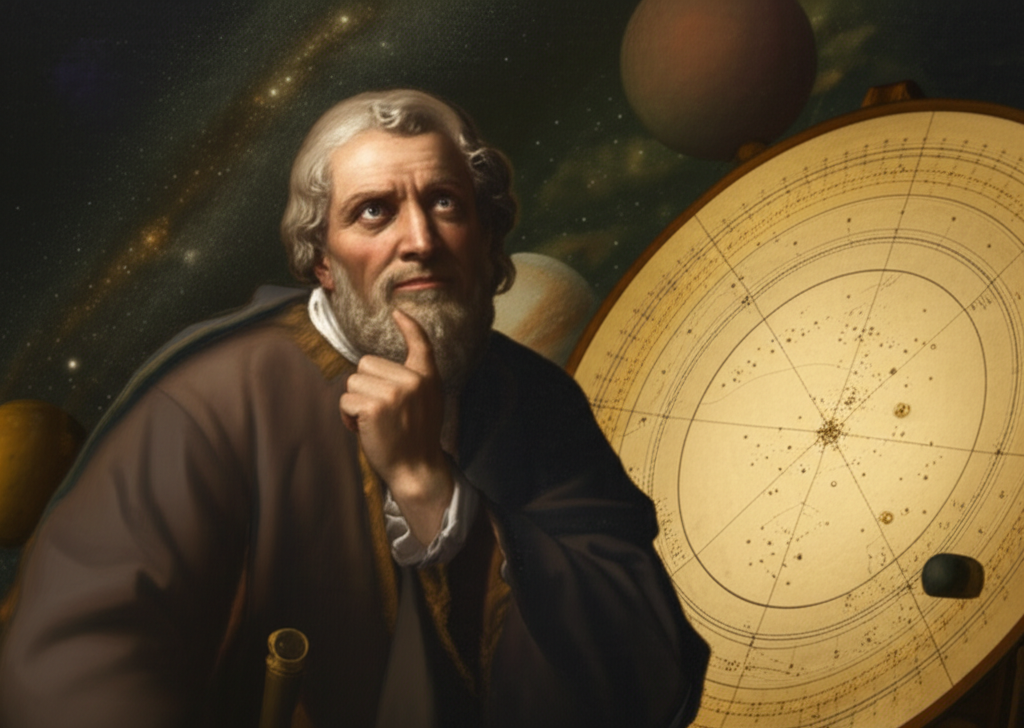
The Fleeting "Now" in a Timeless Cosmos
Our personal experience of time is linear, finite, and deeply subjective. We live in the "now," remembering a past and anticipating a future. Yet, astronomy reveals a universe where "now" is relative, where light from distant galaxies carries information from billions of years ago, making every observation a journey into the past. This scientific reality challenges our ingrained notions of linear time and pushes us towards a more expansive, almost eternal, perspective. It underscores the profound existential questions about the significance of our individual lives within such an immense temporal and spatial landscape.
Eternity: Beyond Endless Time?
Philosophically, eternity is not merely endless time. Many thinkers, particularly within the Abrahamic traditions (drawing heavily from texts in the "Great Books"), distinguish between aevum (an endless duration, but still within time) and aeternitas (a state entirely outside of time, a single, simultaneous "now" where past, present, and future are all present). Boethius, in The Consolation of Philosophy, defines eternity as "the whole, simultaneous and perfect possession of interminable life." This concept of eternity is not about time stretching infinitely, but about transcending time altogether.
Astronomy's revelations, while dealing with immense durations, still operate within a temporal framework. Yet, by forcing us to grapple with such inconceivable scales, it primes our minds to consider what lies beyond even these vast measures. It makes the leap to an a-temporal eternity less abstract, as our conventional temporal markers become increasingly meaningless in the cosmic context.
| Concept of Eternity | Description | Astronomical Context to the very core of philosophical inquiry. The cosmic dance of galaxies, the birth and death of stars, and the expansion of the universe all speak to processes operating on timescales that dwarf our human understanding.
YouTube: "Philosophy of Time in Cosmology"
YouTube: "Boethius Eternity Philosophy"
📹 Related Video: What is Philosophy?
Video by: The School of Life
💡 Want different videos? Search YouTube for: "Astronomy and the Concept of Eternity philosophy"