

Aristocracy and the Concept of Honor
In the annals of political thought, aristocracy emerges not merely as a system of governance by the wealthy or privileged, but as an ideal form where the "best" citizens lead. Central to this ideal, and indeed to the very functioning of such a government, is the profound and multifaceted concept of honor. This article explores how honor, shaped by custom and convention, served as both the ethical compass and the social currency of aristocratic societies, drawing insights from foundational texts of the Western tradition.
The Noble Ideal: Aristocracy and its Virtues
Historically, aristocracy (from Greek aristokratia, meaning "rule by the best") was envisioned as a political structure where governance was entrusted to those deemed most virtuous, wise, or courageous. This was distinct from oligarchy, which is rule by the wealthy, or democracy, which is rule by the many. For thinkers like Plato and Aristotle, the true aristocrat was not born into power by mere chance, but earned their place through excellence of character and intellect.
Beyond Wealth: Defining the "Best"
The "best" in an aristocratic context referred to individuals possessing a superior moral and intellectual character, capable of guiding the state towards the common good. Their authority was meant to stem from their inherent virtues, rather than their lineage or material wealth alone. This ideal, however, was perpetually challenged by the realities of power and the human inclination towards self-interest.
The Weight of Expectation: Honor as an Aristocratic Imperative
Honor in aristocratic societies was far more than mere reputation; it was a deeply ingrained code of conduct, a measure of one's worth, and a powerful motivator. It encompassed both external recognition and an internal commitment to virtue.
Internalizing Virtue, Externalizing Esteem
For the aristocratic class, honor was intrinsically linked to living up to a specific set of ideals. This meant cultivating virtues like courage, justice, wisdom, and magnanimity. The pursuit of honor was often seen as the highest aspiration, driving individuals to perform great deeds and uphold their societal duties. Its loss was considered a fate worse than death.
Key Facets of Aristocratic Honor:
- Virtue and Excellence: Honor was bestowed upon those who demonstrated outstanding moral character and skill, whether in battle, governance, or intellectual pursuits.
- Reputation and Esteem: It was a public acknowledgment of one's standing and worth within the community, earned through actions and lineage.
- Duty and Service: Honor compelled aristocrats to serve the state, protect their people, and uphold the social order, often at great personal cost.
- Integrity and Trustworthiness: An honorable person was expected to keep their word, act with integrity, and be reliable.
- Family and Lineage: Honor was often inherited and carried a heavy responsibility to maintain and enhance the family name and legacy.
Governing by Principle: Honor's Influence on the State
The concept of honor played a critical role in shaping the very fabric of aristocratic government. It served as an unwritten constitution, guiding the decisions and actions of the ruling class. The fear of dishonor often proved a more potent deterrent against corruption or tyranny than any written law.
The Role of Custom and Convention
The specific expressions and expectations of honor were largely defined by custom and convention within a given society. These uncodified rules dictated proper conduct, social hierarchy, and the appropriate responses to challenges to one's honor. From dueling codes to elaborate rituals of courtesy, custom and convention reinforced the aristocratic worldview and its values. They created a shared understanding of what was noble, what was shameful, and how one ought to behave as a member of the ruling elite.
Philosophers on Aristocracy and Honor:
| Philosopher | Key Work(s) | Perspective on Honor in Aristocracy Delineating the concept of aristocracy and honor involves a deep dive into political philosophy. The "Great Books of the Western World" provide a rich tapestry of perspectives, from Plato's ideal Republic to the pragmatic realpolitik of Machiavelli.
Aristocracy, in its pure form, signifies "rule by the best." This "best" isn't necessarily about wealth or heredity, but about virtue, wisdom, and excellence. Thinkers like Plato, in his Republic, envisioned philosopher-kings, individuals whose superior intellect and moral character qualified them to lead. Aristotle, in his Politics and Nicomachean Ethics, also explored forms of government where the virtuous few could govern for the common good.
Central to the functioning and legitimacy of such a system is the concept of honor. Honor, for the aristocratic class, was not merely a personal attribute but a public trust. It encapsulated a complex web of virtues, duties, and expectations.
- Internal Virtue: At its core, honor was tied to the pursuit of excellence and the embodiment of virtues like courage, justice, temperance, and wisdom. An honorable aristocrat was expected to act with integrity, uphold their word, and demonstrate magnanimity.
- External Recognition: Honor also involved public esteem and recognition. It was a social currency, often earned through service to the state, military prowess, or exemplary moral conduct. Loss of honor could mean social ostracization or worse.
- Duty to the State (Government): For the ruling elite, honor often meant prioritizing the well-being of the polis or state above personal gain. Their decisions in government were theoretically guided by a sense of duty and the desire to maintain their honorable standing.
The definition and enforcement of honor were heavily influenced by custom and convention. These unwritten rules dictated how an aristocrat ought to behave, how disputes were settled, and what constituted a breach of honor. From the codes of chivalry in medieval Europe to the elaborate social protocols of ancient Athens, custom and convention provided the framework within which aristocratic honor operated. They ensured a degree of social cohesion and accountability, even if imperfectly applied.
However, the ideal of aristocracy and its inherent honor was often corrupted. When the pursuit of honor devolved into mere pride, ambition, or the protection of inherited privilege, aristocracy could easily degenerate into oligarchy or tyranny, as many philosophers noted. The tension between the noble ideal of rule by the best and the reality of human fallibility is a recurring theme in the Great Books.
The Noble Ideal: Aristocracy and its Virtues
The term aristocracy, derived from the Greek aristokratia, literally means "rule by the best." This foundational definition immediately distinguishes it from other forms of government such as democracy (rule by the people) or oligarchy (rule by the wealthy). For classical philosophers, this "best" referred not to inherited wealth or social status alone, but to a moral and intellectual superiority, a capacity for virtue and wisdom that qualified individuals for leadership.
Beyond Wealth: Defining the "Best"
In Plato's Republic, the ideal state is governed by "philosopher-kings," individuals who have ascended through rigorous intellectual and moral training to grasp the Forms of Justice and Goodness. Their rule is justified by their superior knowledge and their unwavering commitment to the common good, embodying the highest form of aristocratic leadership. Similarly, Aristotle, in his Politics, discusses aristocracy as a form of rule by the virtuous few, who govern for the benefit of all citizens, distinguishing it sharply from oligarchy, which serves only the rich. The "best" were those whose actions consistently demonstrated a profound understanding of ethics and a dedication to civic responsibility.
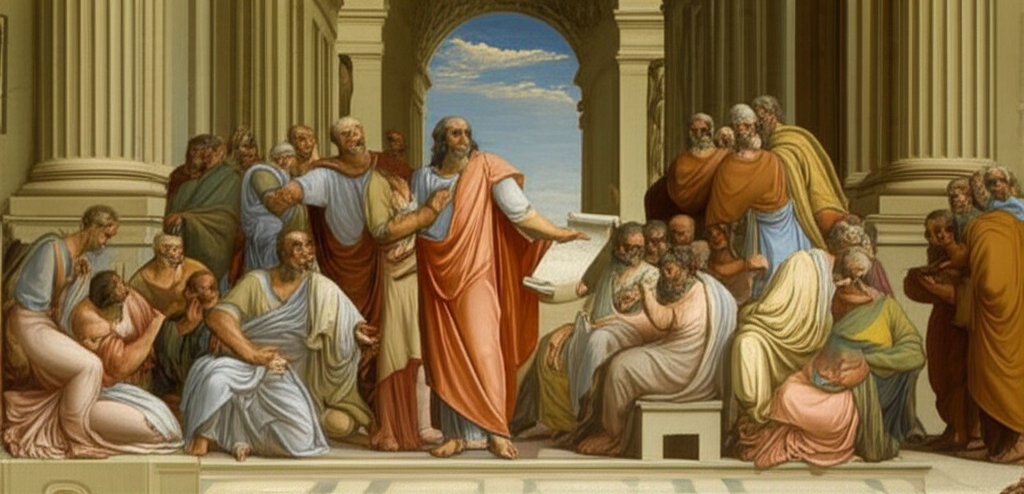
(Image: A detailed classical Greek fresco depicting a group of robed philosophers engaged in earnest discussion within a grand stoa, with one central figure gesturing towards a scroll, symbolizing the pursuit of wisdom and civic virtue as the foundation of an ideal aristocracy.)
The Weight of Expectation: Honor as an Aristocratic Imperative
Honor stands as the indispensable ethical and social construct within any truly aristocratic system. It is far more than mere reputation; it is an internal commitment to a code of conduct and an external acknowledgment of one's worth, both intrinsically linked to the function of government and societal order.
Internalizing Virtue, Externalizing Esteem
For the aristocratic class, honor was the very essence of their identity. It demanded the cultivation of specific virtues – courage on the battlefield, justice in governance, temperance in personal life, and wisdom in counsel. The pursuit of honor was often a lifelong endeavor, driving individuals to perform deeds that would earn them lasting renown and reinforce their standing. To lose honor, through cowardice, injustice, or deceit, was considered a profound personal and familial catastrophe, often worse than death itself. This dual nature of honor – as an internalized moral compass and an externally recognized badge of merit – made it a powerful force in shaping aristocratic behavior.
Key Facets of Aristocratic Honor:
- Virtuous Conduct: Adherence to a high moral standard, emphasizing integrity, truthfulness, and ethical decision-making.
- Courage and Fortitude: Demonstrated bravery in the face of adversity, particularly in defense of the state or one's principles.
- Public Esteem: The respect and admiration earned from peers and the populace through exemplary actions and character.
- Service to the Polis: A commitment to the welfare of the community and active participation in its government, often through military or political leadership.
- Magnanimity: Greatness of soul, involving generosity, a disdain for pettiness, and a noble bearing, as articulated by Aristotle.
- Lineage and Legacy: The responsibility to uphold and enhance the honor of one's family name, often inherited through generations.
Governing by Principle: Honor's Influence on the State
The concept of honor was not merely a personal adornment for the aristocracy; it was a fundamental principle that permeated their approach to government. It served as an unofficial, yet potent, constitutional force, influencing political decisions, judicial processes, and military strategies.
The Role of Custom and Convention
The specific expressions, expectations, and boundaries of honor were meticulously defined and reinforced by custom and convention. These unwritten social rules dictated everything from proper aristocratic demeanor to the acceptable means of resolving disputes (e.g., dueling). They established a shared understanding within the ruling class of what was considered noble and what was deemed shameful, thereby maintaining social cohesion and exerting a powerful, often unspoken, control over behavior. Custom and convention were the bedrock upon which the edifice of aristocratic honor stood, ensuring its continuity and influence across generations.
Philosophers on Aristocracy and Honor:
| Philosopher | Key Work(s) | Perspective on Honor in Aristocracy to the Great Books, its influence on the human understanding of government and society is undeniable. The concept of honor, intricately woven into its fabric, served as both its guiding principle and its potential downfall.
Echoes Through the Ages: The Enduring Legacy of Honor
While pure aristocracy as a form of government has largely receded from the modern political landscape, the concept of honor continues to resonate. Its influence can be seen in the enduring emphasis on ethical leadership, the importance of reputation in public life, and the societal value placed on integrity and service. The Great Books remind us that while the structures of power may change, the human struggle to define and uphold what is "best" remains a timeless philosophical pursuit.
YouTube: "Plato's Republic aristocracy"
YouTube: "Aristotle on virtue and honor"
📹 Related Video: What is Philosophy?
Video by: The School of Life
💡 Want different videos? Search YouTube for: "Aristocracy and the Concept of Honor philosophy"