

The Celestial Ladder: Unveiling Angelic Hierarchy in Theology
Angelic hierarchies, a cornerstone of classical Theology, offer a profound glimpse into the structured cosmos envisioned by many religions. Far from mere ethereal beings, angels, as explored in works from the Great Books of the Western World, represent distinct orders of divine intelligence and will, each embodying a unique Form of spiritual existence and serving specific functions in the divine economy. This intricate system not only defines the celestial realm but also reflects deep philosophical insights into order, causality, and humanity's relationship with the divine.
Echoes of the Divine: Angels in Theological Thought
The concept of an Angel as a divine messenger or spiritual being transcends many Religions, yet it is in Christian Theology that the idea of a formal, ordered hierarchy truly blossomed. Thinkers from the early Church Fathers to medieval scholastics grappled with the nature, purpose, and structure of these celestial intelligences, seeking to understand their place in God's creation. The systematization of these heavenly hosts offers a powerful lens through which to view the divine order, reflecting a universe governed by reason and purpose.
The foundational framework for the Christian angelic hierarchy is often attributed to Pseudo-Dionysius the Areopagite, whose work Celestial Hierarchy (a text whose influence resonates through the Great Books) meticulously categorized angels into nine choirs, arranged in three triads. This schema was later adopted and extensively elaborated upon by scholastic philosophers like St. Thomas Aquinas in his Summa Theologica, where he dedicates significant portions to the nature and function of angels, defining them as purely intellectual Forms, distinct from material beings.
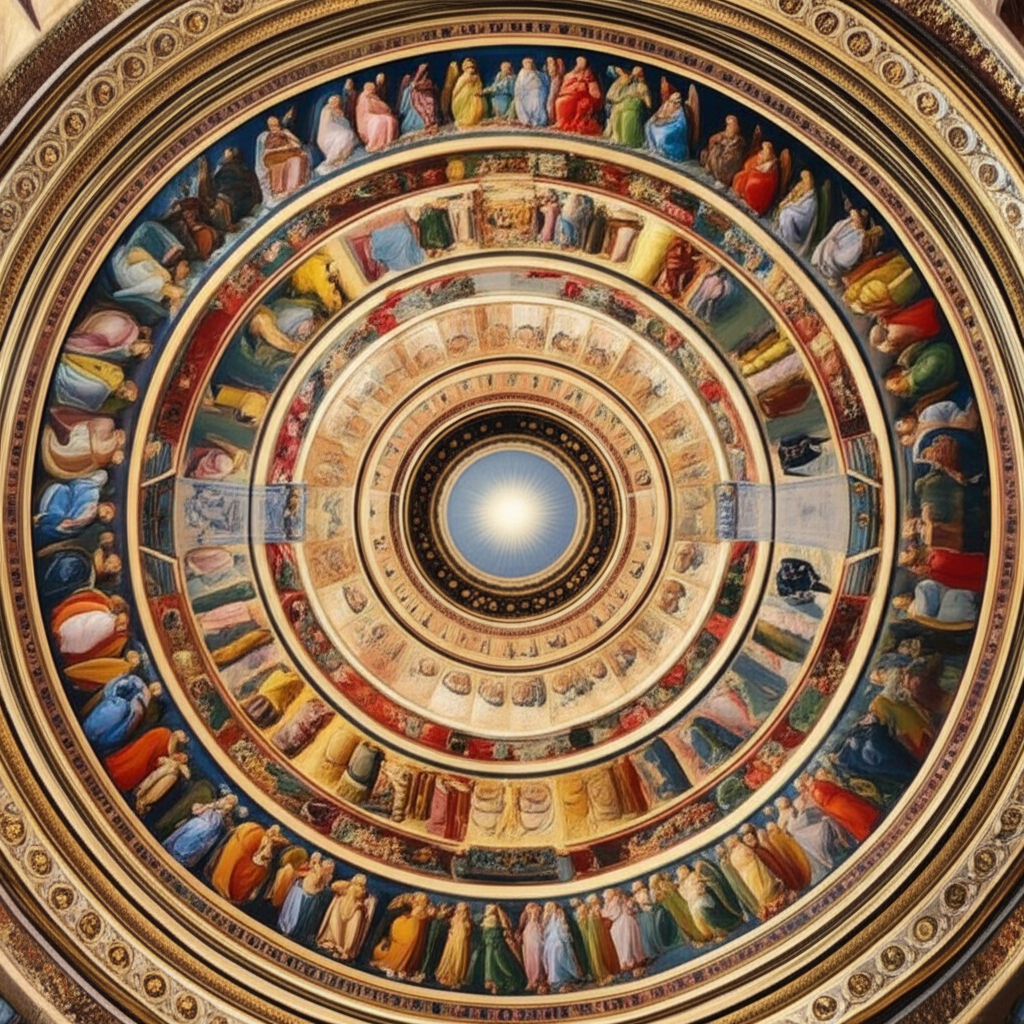
The Orders of Heaven: A Structured Cosmos
The angelic hierarchy is not merely a list of names; it is a profound philosophical statement about the nature of reality. Each order, or choir, represents a distinct Form of divine illumination and service, with higher orders receiving and transmitting divine knowledge more directly. This tiered structure underscores the medieval understanding of a universe where every being has its proper place and function, participating in the divine plan according to its nature.
Here is a breakdown of the traditional nine choirs, often grouped into three hierarchies, illustrating their roles and proximity to the divine:
| Hierarchy | Angelic Choir | Primary Function & Characteristics |
|---|---|---|
| First Hierarchy | Seraphim | "The Burning Ones" – Closest to God, consumed by divine love and zeal, guardians of God's throne. |
| (Counselors) | Cherubim | "Fullness of Knowledge" – Bearers of divine wisdom, guardians of the celestial records and Eden. |
| Thrones | "The Elders" – Embody divine justice and will, serving as vessels of God's power and judgment. | |
| Second Hierarchy | Dominions | "Lordships" – Regulate the duties of lower angels, receiving orders from God and governing creation. |
| (Governors) | Virtues | "The Strong" – Oversee the movement of celestial bodies, responsible for miracles and courage. |
| Powers | "Authorities" – Battle evil forces, maintain cosmic order, and prevent demonic oppression. | |
| Third Hierarchy | Principalities | "Rulers" – Guard nations and cities, inspiring leaders and protecting religious institutions. |
| (Messengers) | Archangels | "Chief Angels" – Bear God's most important messages to humanity (e.g., Gabriel, Michael, Raphael). |
| Angels | "Messengers" – The lowest order, closest to humanity, serving as guardian angels and divine envoys. |
This systematic classification reveals a universe of intricate design, where spiritual beings are not chaotic but ordered, each possessing a specific Form of being that contributes to the cosmic harmony.
The Philosophical Resonance of Angelic Forms
The study of angelic hierarchy delves into profound philosophical questions about existence, knowledge, and divine providence. For Aquinas, angels are pure intellects, devoid of matter, and thus possess a complete and immediate knowledge of the Forms of things. Their existence highlights the distinction between material and immaterial being, challenging us to consider realities beyond our sensory perception.
Moreover, the hierarchy itself is a Form of perfect order, reflecting the ultimate order of God's mind. Each rank's subservience to the one above it, and ultimately to God, illustrates a chain of being that extends from the divine source to the lowest created being. This understanding provided medieval thinkers with a coherent worldview, one where every element, from the humblest stone to the most exalted Seraph, played a vital role in the grand tapestry of creation.
The enduring fascination with angelic hierarchies, as evidenced by their presence and discussion across millennia of philosophical and theological texts within the Great Books of the Western World, speaks to humanity's persistent quest to understand the unseen, to map the spiritual landscape, and to define the intricate relationship between the divine and the created. It invites us to ponder the very Form of order that underpins existence itself.
**## 📹 Related Video: PLATO ON: The Allegory of the Cave
Video by: The School of Life
💡 Want different videos? Search YouTube for: ""Aquinas on Angels: Understanding Pure Intelligences""**
**## 📹 Related Video: ARISTOTLE ON: The Nicomachean Ethics
Video by: The School of Life
💡 Want different videos? Search YouTube for: ""The Celestial Hierarchy of Pseudo-Dionysius Explained""**