

The Ordered Cosmos: Exploring Angelic Hierarchy in Theology
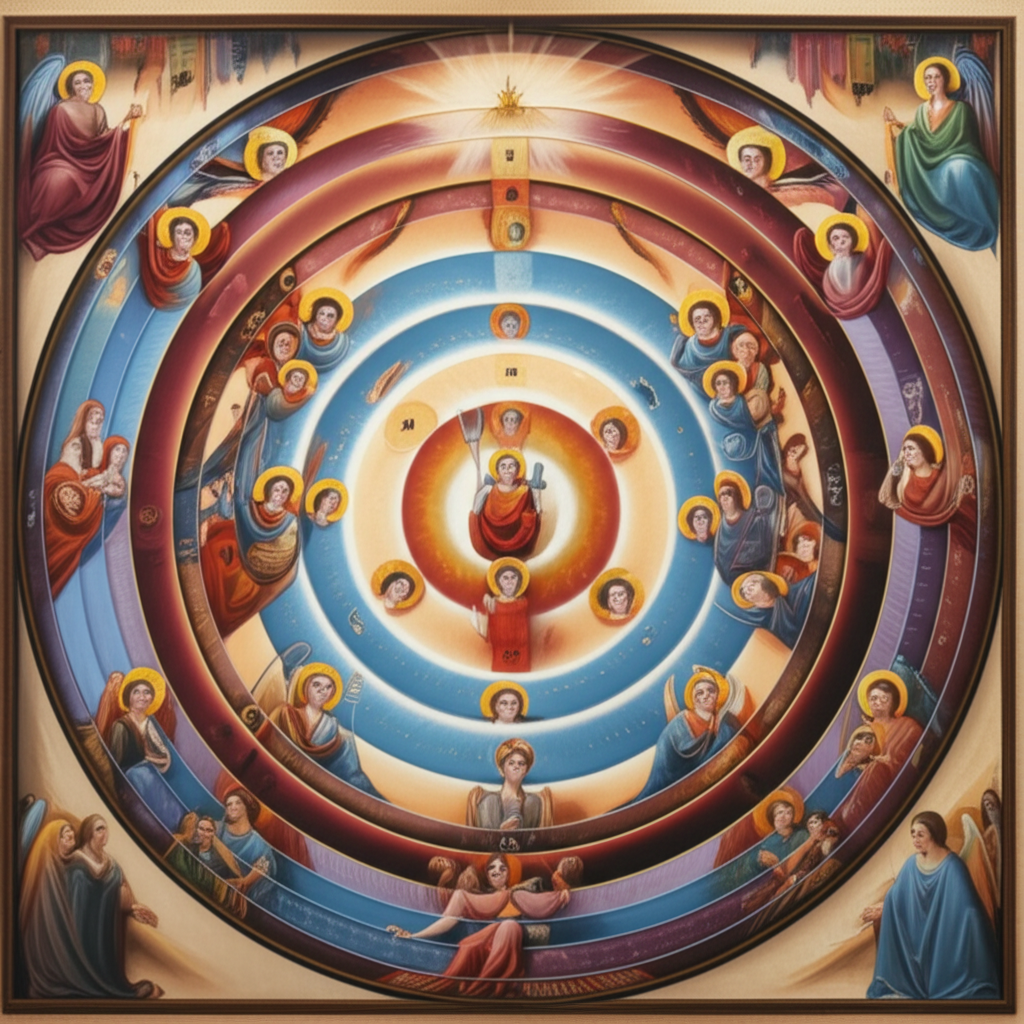
The concept of an angelic hierarchy, a structured order of celestial beings, has profoundly shaped Theology and Religion for millennia. Far from being mere mythological embellishments, these intricate classifications of Angels offer a profound lens through which to understand the divine order, the nature of creation, and humanity's place within it. This article delves into the philosophical and theological underpinnings of angelic hierarchies, particularly as articulated by foundational thinkers whose works are cornerstones of the Great Books of the Western World, revealing how these celestial strata inform our understanding of being, intellect, and Form.
The Genesis of Celestial Order: From Ancient Contemplation to Christian Dogma
The idea of a graded cosmos, with various levels of being ascending towards the divine, is not unique to Christian Theology. Ancient philosophical traditions, particularly Neoplatonism, posited emanations and hierarchies of intellect and spirit. However, it was within the burgeoning Christian thought that the concept of an Angelic hierarchy truly solidified, largely through the mystical writings attributed to Dionysius the Areopagite in The Celestial Hierarchy. This influential text, though pseudepigraphical, became a cornerstone for subsequent theological discourse, especially in the medieval period.
Dionysius’s work, deeply influenced by Neoplatonic ideas, sought to systematize the disparate biblical references to Angels into a coherent, stratified order. This wasn't merely an exercise in taxonomy; it was an attempt to understand the very structure of the cosmos, reflecting the perfect order and wisdom of God. Each angelic rank, by its nature and function, mediates divine knowledge and grace to those below it, ultimately reaching humanity.
The Nine Choirs: A Ladder to the Divine
Dionysius's Theology presented a tripartite division of Angels, with each division containing three distinct orders or "choirs." This structure became the most widely accepted model within Western Religion and Theology, meticulously detailed and contemplated by scholars like Thomas Aquinas.
The hierarchy is typically presented as follows, moving from the closest to God down to those who interact more directly with the human realm:
-
First Sphere (Councillors of God): These Angels contemplate God directly, reflecting His supreme wisdom and love.
- Seraphim: The highest order, characterized by their burning love for God. Their name signifies "the burning ones."
- Cherubim: Possess profound knowledge and wisdom, guardians of divine light and truth.
- Thrones: Embody divine justice and authority, serving as divine chariots and foundations.
-
Second Sphere (Governors of Heaven): These Angels govern the cosmos and administer divine will.
- Dominions (or Lordships): Regulate the duties of other Angels, ensuring order and justice.
- Virtues: Perform miracles and bestow grace and courage, often associated with natural forces.
- Powers: Combat evil forces, maintaining cosmic order against demonic influence.
-
Third Sphere (Heavenly Messengers and Protectors): These Angels are most actively involved in human affairs, delivering messages and providing protection.
- Principalities (or Rulers): Guide nations and communities, overseeing human leaders.
- Archangels: Bear significant messages from God to humanity, such as Gabriel and Michael.
- Angels: The lowest rank, closest to humanity, serving as personal guardians and messengers.
Aquinas and the Angelic Form: Pure Intellect and Act
Thomas Aquinas, a towering figure in scholastic Theology and philosophy, extensively explored the nature of Angels in his Summa Theologica, drawing heavily from Aristotle's metaphysics. For Aquinas, Angels are not mere spiritual beings but pure intellects, entirely free from matter. This distinction is crucial for understanding their Form.
Aquinas posited that each Angel is its own species or Form. Unlike humans, who are a composite of body and soul (matter and Form), Angels are subsistent forms – pure intelligences. They exist in a state of pure act, without the potentiality inherent in material beings. This means they do not learn through sensory experience or discursive reasoning like humans; rather, they grasp truth directly and intuitively. Their knowledge is infused by God, perfect within their specific rank.
This understanding of Angels as pure intellectual Forms has profound implications. It places them on a higher ontological plane than humans, closer to God's own pure actuality. Their hierarchy, therefore, is not merely a bureaucratic arrangement but a reflection of varying degrees of intellectual perfection and proximity to the divine essence.
Philosophical Resonance: Order, Knowledge, and the Chain of Being
The theological concept of angelic hierarchy resonates deeply with broader philosophical discussions concerning order, knowledge, and the "Great Chain of Being." It posits a cosmos that is not chaotic but meticulously structured, reflecting a divine intellect that orders all things according to their nature.
- Order and Harmony: The hierarchy underscores the ancient Greek philosophical ideal of cosmic harmony, where every element has its proper place and function. This order is not arbitrary but flows from the divine essence.
- Mediated Knowledge: The graded structure suggests that divine knowledge and grace are mediated downwards, implying that understanding God requires ascending through various levels of being and intellect.
- The Nature of Intellect: By defining Angels as pure intellects, theologians like Aquinas offered a model for understanding non-material intelligence, pushing the boundaries of philosophical inquiry into the nature of thought and being itself.
In essence, the study of angelic hierarchy transcends mere religious dogma; it becomes a profound exercise in metaphysics, exploring the very fabric of existence from the lowest material Form to the highest pure intellect.
Conclusion: An Enduring Framework for Understanding
The concept of angelic hierarchy, meticulously detailed in the Theology of the Church Fathers and scholastic philosophers, continues to offer a rich framework for understanding the divine, the cosmos, and the nature of spiritual beings. Far from being an outdated curiosity, it invites us to ponder the profound order of creation, the various Forms of existence, and the intricate ways in which divine will is manifested throughout the universe. It reminds us that our human experience is but one facet of a grander, more complex reality, perpetually guided and sustained by unseen, yet profoundly ordered, celestial powers.
YouTube: "Thomas Aquinas angels pure intellect"
YouTube: "Dionysius the Areopagite Celestial Hierarchy explained"
📹 Related Video: What is Philosophy?
Video by: The School of Life
💡 Want different videos? Search YouTube for: "Angelic Hierarchy in Theology philosophy"