

Angelic Hierarchy in Theology: A Ladder to the Divine
The concept of an angelic hierarchy, a structured order of celestial beings, has profoundly shaped theological and philosophical thought across various religions. Far from being a mere mythological flourish, this intricate system provides a framework for understanding divine governance, the nature of creation, and the very Form of the cosmos. This article delves into the historical development and theological significance of angelic hierarchies, particularly within the Western tradition, exploring how these celestial orders mediate between the divine and the material, reflecting an ordered universe.
The Ordered Cosmos: A Theological Imperative
From ancient times, humanity has sought to understand its place within a vast and often mysterious universe. Theology, as the systematic study of the divine, naturally extended its inquiry to those beings believed to exist between God and humanity – the Angels. These messengers and agents of the divine are not merely a collection of disparate spirits but are often conceived as organized into distinct ranks, each with specific roles, attributes, and levels of proximity to the divine essence. This hierarchical structure is not arbitrary; it is seen as an intrinsic part of God's perfect order, reflecting a cosmic chain of being that descends from the ultimate source to the lowest forms of creation.
The idea of a structured celestial court finds echoes in various ancient traditions, but it was in early Christian thought that the most enduring and detailed model of angelic hierarchy took form. This model, largely codified by Pseudo-Dionysius the Areopagite, became foundational for later scholastic thinkers, most notably Thomas Aquinas, whose works are cornerstones of Western philosophical and theological inquiry, often found within the Great Books of the Western World.
Pseudo-Dionysius and the Celestial Hierarchy
The treatise On the Celestial Hierarchy, attributed to Dionysius the Areopagite (a figure now recognized as "Pseudo-Dionysius" due to the late dating of his works), provided the definitive schema for angelic orders in Western theology. Writing around the 5th or 6th century CE, Pseudo-Dionysius synthesized Neoplatonic philosophical concepts with Christian doctrine, presenting a universe meticulously ordered by divine emanation. For him, the hierarchy of Angels was a reflection of God's own perfect order, a means by which divine illumination descends to creation.
Pseudo-Dionysius organized the Angels into nine choirs, grouped into three triads, each triad representing a different level of proximity to God and a distinct mode of divine illumination and ministry. This structure became the standard reference point for subsequent theological discussions.
Thomas Aquinas and Scholastic Integration
Centuries later, Thomas Aquinas, in his monumental Summa Theologica, extensively integrated and elaborated upon Pseudo-Dionysius's angelic hierarchy. Aquinas viewed the angelic orders not just as ranks but as distinct species, each possessing a unique form and intellectual capacity, allowing them to comprehend God in different ways and to fulfill specific functions in the divine plan. For Aquinas, the hierarchy underscored the rational and ordered nature of God's creation, with Angels serving as perfect examples of intellectual beings, free from the constraints of matter.
The Nine Choirs of Angels: A Structured Overview
The hierarchical structure popularized by Pseudo-Dionysius and affirmed by Aquinas details nine distinct orders of Angels, divided into three spheres, or triads, based on their closeness to God and their primary functions.
| Sphere (Triad) | Choir/Order | Primary Function | Characteristics & Significance |
|---|---|---|---|
| First Sphere (Closest to God) |
Seraphim | Bearers of Divine Love & Light | Incandescent, fiery beings; highest Angels directly contemplating God's essence; inspire love. |
| Cherubim | Guardians of Divine Wisdom & Knowledge | Possess profound knowledge of God; guard sacred places and divine mysteries; inspire wisdom. | |
| Thrones | Bearers of Divine Justice & Will | Embody divine justice and authority; associated with God's throne; manifest divine will. | |
| Second Sphere (Heavenly Governors) |
Dominions | Regulators of Angelic Duties | Govern lower Angels; receive orders from God and transmit them; leaders of the celestial bureaucracy. |
| Virtues | Dispenser of Divine Grace & Miracles | Empower creation with divine grace; perform miracles; associated with strength and courage. | |
| Powers | Protectors Against Evil | Combat evil forces; maintain cosmic order against demonic influence; guard humanity. | |
| Third Sphere (Divine Messengers & Ministers) |
Principalities | Guardians of Nations & Cities | Oversee earthly kingdoms, nations, and communities; inspire leaders. |
| Archangels | Chief Messengers & Leaders | Deliver important messages; lead other Angels; examples include Michael, Gabriel, Raphael. | |
| Angels | Direct Messengers & Guardians | The lowest order, closest to humanity; serve as personal guardians and direct communicators of God's will. |
The Philosophical Significance of Angelic Form
Beyond their roles, the Angels themselves embody a profound philosophical concept: the pure Form of intellect and will. Unlike humans, who are composite beings of body and soul, Angels are traditionally understood as purely spiritual substances. Their hierarchy, therefore, is not merely one of rank but of perfection in Form – a gradient of intellectual capacity and proximity to the divine intellect. Each higher order possesses a more perfect form, enabling a more direct and unmediated apprehension of God's truth and beauty. This understanding of Angels as pure intellects illuminates the scholastic pursuit of knowledge and the belief in a universe structured by rational principles.
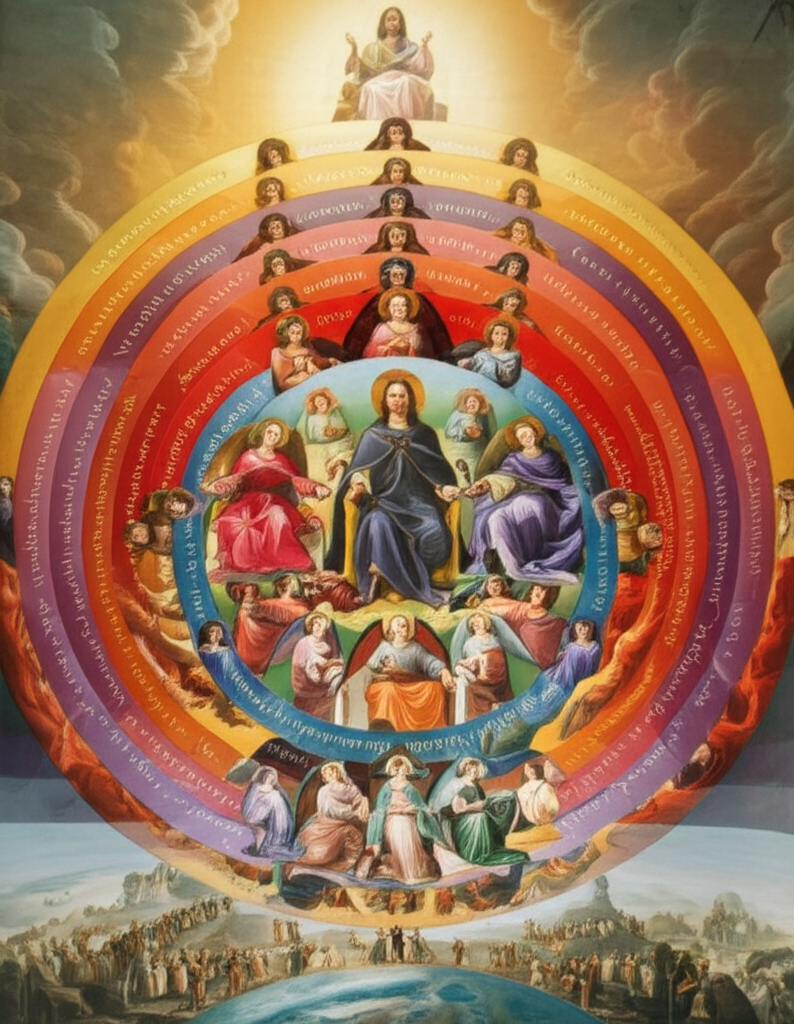
Conclusion: Order, Revelation, and the Divine Plan
The concept of angelic hierarchy in theology is far more than a quaint relic of ancient religion. It represents a sophisticated attempt to rationalize and understand the structure of the cosmos, the nature of divine governance, and the intricate ways in which God interacts with creation. From the fiery Seraphim contemplating the divine essence to the humble Guardian Angel guiding a human soul, each order plays a vital role in maintaining the cosmic order and mediating the flow of divine grace and knowledge. This hierarchical vision underscores a fundamental belief in an ordered universe, where every being, from the highest Angel to the smallest particle, has its place and purpose within the grand tapestry of God's creation, reflecting the ultimate Form of divine perfection.
📹 Related Video: ARISTOTLE ON: The Nicomachean Ethics
Video by: The School of Life
💡 Want different videos? Search YouTube for: ""Pseudo-Dionysius Celestial Hierarchy Explained""
📹 Related Video: KANT ON: What is Enlightenment?
Video by: The School of Life
💡 Want different videos? Search YouTube for: ""Thomas Aquinas Angels Summa Theologica""