

Celestial Order: Unpacking Angelic Hierarchy in Theology
By Emily Fletcher
Summary: The concept of angelic hierarchy is a profound and enduring aspect of Christian theology and Western religion, offering a structured understanding of divine order and the spiritual realm. This article explores the historical development and intricate form of these celestial classifications, primarily drawing from foundational texts and thinkers within the Great Books of the Western World tradition. We will delve into the distinct roles and attributes of the various choirs of angels, examining their philosophical and theological significance as intermediaries between God and humanity.
The Divine Blueprint: An Introduction to Angelic Order
In the grand tapestry of theology, few concepts are as intricately woven and deeply symbolic as the angelic hierarchy. Far from being mere mythological embellishments, these classifications represent a sophisticated attempt to comprehend the very form of divine governance and the spiritual infrastructure of the cosmos. For centuries, thinkers within various religions, particularly Christianity, have grappled with the question of how God communicates and acts within creation, and the structured ranks of angels provide a compelling answer. This celestial architecture, meticulously detailed by early Christian mystics and later systematized by scholastic philosophers, offers not just a glimpse into heaven but also a reflection on earthly order and the human quest for understanding the divine.
Historical Roots: From Mystical Vision to Scholastic System
The most influential exposition of angelic hierarchy originates from the anonymous 5th or 6th-century Syrian Christian writer, Pseudo-Dionysius the Areopagite, whose work On the Celestial Hierarchy (a text whose influence resonates through the Great Books of the Western World) provided the foundational framework. Dionysius, blending Neoplatonic philosophy with Christian revelation, envisioned a universe ordered by a divine emanation, with angels serving as intermediaries in this flow of grace and illumination.
Later, in the 13th century, Saint Thomas Aquinas, a towering figure whose Summa Theologica is a cornerstone of Western thought (and certainly part of the Great Books canon), further elaborated on Dionysius's scheme. Aquinas provided a rigorous philosophical and theological justification for the hierarchy, integrating it into his comprehensive understanding of God, creation, and salvation. For Aquinas, the varying intellectual capacities and proximity to God dictated the form and function of each angelic rank, making them essential to understanding divine providence.
The Nine Choirs: A Structured Heaven
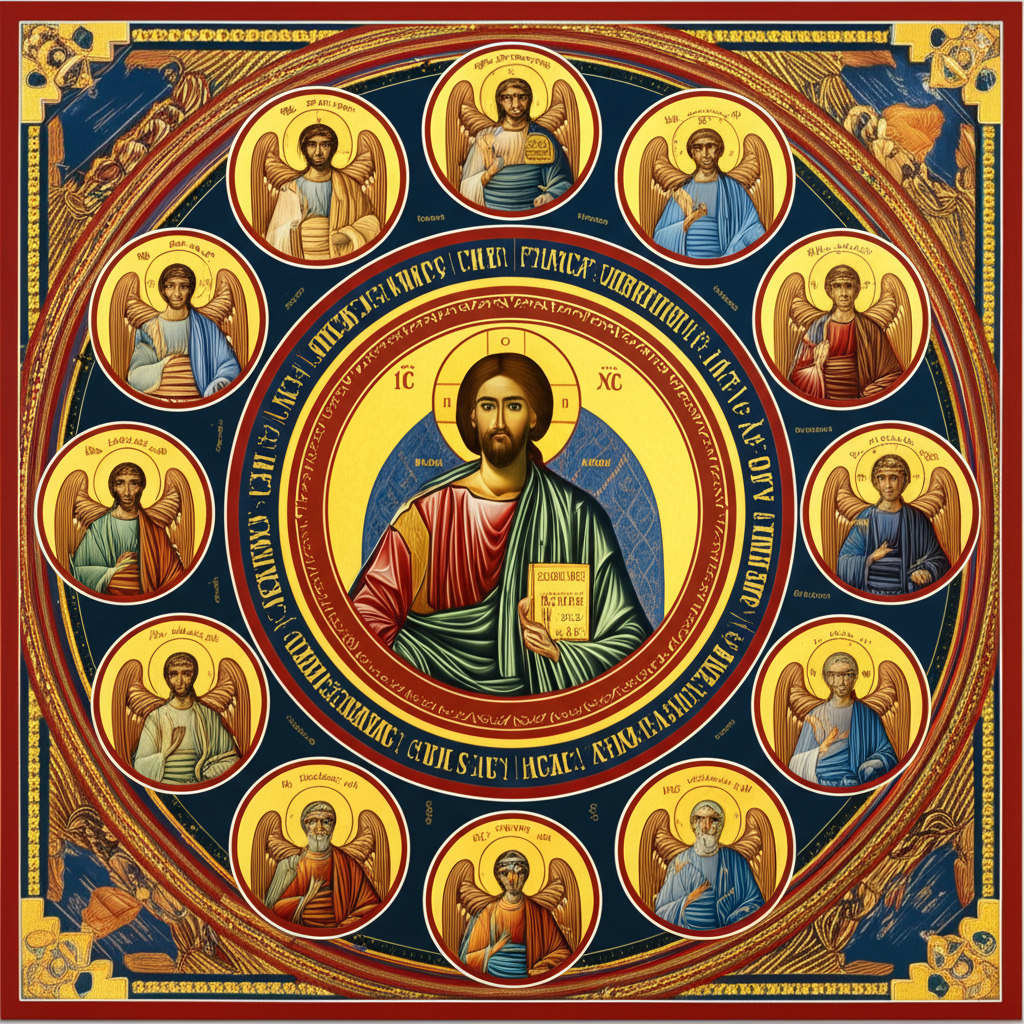
The angelic hierarchy is traditionally divided into three spheres, or triadic orders, each containing three choirs. This symmetrical structure underscores the inherent order and beauty envisioned in the divine plan.
Table: The Three Spheres and Nine Choirs of Angels
| Sphere (Order) | Choir 1 | Choir 2 | Choir 3 | Primary Role / Attribute |
|---|---|---|---|---|
| First Sphere | Seraphim | Cherubim | Thrones | Closest to God; devoted to contemplation and divine love. |
| (Divine Counsel) | (Burning Ones) | (Fullness of Wisdom) | (Seats of God) | |
| Second Sphere | Dominions | Virtues | Powers | Govern the cosmos; receive and transmit divine commands. |
| (Governors) | (Lordships) | (Miracle Workers) | (Authorities) | |
| Third Sphere | Principalities | Archangels | Angels | Closest to humanity; deliver messages and guide individuals/nations. |
| (Messengers) | (Rulers) | (Chief Angels) | (Messengers) |
First Sphere: The Counsellors
These angels are closest to God, directly reflecting His glory and wisdom.
- Seraphim: The highest order, characterized by their burning love and zeal for God. Their name means "the burning ones," symbolizing their intense ardor and constant praise. They are depicted with six wings, two covering their faces, two their feet, and two for flying, as seen in Isaiah's vision.
- Cherubim: Known for their profound knowledge and wisdom, the Cherubim guard the way to the Tree of Life (Genesis 3:24) and are associated with divine wisdom and understanding. They are often depicted with four wings and covered in eyes, symbolizing their comprehensive insight.
- Thrones: These angels symbolize divine justice and authority. They are the "seats of God," through whom God exercises His judgment. They are often depicted as great wheels or chariots, embodying the stability and majesty of the divine throne.
Second Sphere: The Governors
These angels oversee the celestial sphere and govern the universe, receiving their commands from the First Sphere.
- Dominions (Lordships): They regulate the duties of the lower angels, ensuring that divine commands are carried out. They symbolize divine majesty and order.
- Virtues: Associated with miracles and the working of wonders, the Virtues channel divine energy into the world, often inspiring courage and grace.
- Powers (Authorities): These angels combat evil forces and maintain cosmic order, preventing the demonic from disrupting the physical world. They are the guardians against spiritual attacks.
Third Sphere: The Messengers
These angels are most directly involved with humanity and the material world, acting as divine intermediaries.
- Principalities (Rulers): They guard nations and cities, overseeing groups of people and inspiring leaders. They are often seen as the protectors of religion and the rulers of earthly kingdoms.
- Archangels: These are the chief angels, known for delivering important messages to humanity. Gabriel (announcing the birth of Jesus) and Michael (the warrior angel) are prominent examples.
- Angels: The lowest but most numerous rank, these are the common messengers and guardians, directly interacting with individuals, delivering prayers, and offering protection.
The Philosophical and Theological Significance of Form
The elaborate form of the angelic hierarchy is not merely an exercise in spiritual taxonomy; it carries profound philosophical and theological weight.
- Divine Order and Providence: The hierarchy underscores the belief in an ordered cosmos, where nothing is arbitrary. It reflects God's meticulous design and His pervasive providence, demonstrating how divine will flows through distinct channels to reach every part of creation.
- A Ladder to the Divine: Philosophically, the hierarchy can be seen as a "ladder of ascent," a graded series of beings that bridge the immense gap between the infinite God and finite humanity. Each rank participates in the divine nature to a greater or lesser degree, offering a structured path for understanding divine illumination.
- Intermediaries and Messengers: Angels serve as crucial intermediaries, facilitating communication between the divine and the human. They are instruments of God's will, carrying out His commands, delivering revelations, and offering protection. This highlights the active role of the spiritual realm in human history and individual lives.
- Reflection on Human Governance: The celestial hierarchy also offered a model, or ideal form, for human governance and societal structure. If heaven itself is ordered by rank and function, then perhaps earthly institutions should reflect a similar, divinely inspired order.
Enduring Legacy and Modern Reflection
While the literal belief in a rigid angelic hierarchy may have waned in some modern interpretations of religion, its conceptual power endures. It speaks to a fundamental human desire for order, meaning, and connection to the transcendent. The angelic hierarchy remains a testament to the depth of theological speculation and the imaginative scope of human attempts to comprehend the divine, a spiritual map that continues to inspire reflection on the nature of being, consciousness, and the ultimate form of reality.
YouTube:
- "Thomas Aquinas on Angels: Summa Theologica Explained"
- "Pseudo-Dionysius the Areopagite: Celestial Hierarchy Summary"
📹 Related Video: What is Philosophy?
Video by: The School of Life
💡 Want different videos? Search YouTube for: "Angelic Hierarchy in Theology philosophy"