

The concept of angelic hierarchy is a foundational element within Christian Theology, providing a structured understanding of celestial beings and their roles. Far from a mere mythical construct, this intricate system, meticulously detailed by thinkers like Dionysius the Areopagite and later synthesized by Thomas Aquinas, offers profound insights into divine order, the nature of spiritual entities, and the very Form of creation itself. It is a cornerstone of religious thought that shapes our perception of the cosmos and our place within it.
The Divine Order: Unpacking Angelic Hierarchy
For centuries, the human mind has grappled with the unseen, seeking to impose order upon the spiritual realm. Within the grand tapestry of Theology, the idea of an angelic hierarchy stands as one of the most compelling and enduring conceptualizations of celestial existence. This structured framework, often overlooked in modern discourse, was a subject of intense philosophical and religious inquiry, finding its most influential articulation in texts that form part of the Great Books of the Western World. It speaks to a profound human desire to comprehend the divine administration and the intricate relationships between God, spiritual beings, and humanity.
The notion of a celestial pecking order is not merely a quaint belief but a deeply considered theological construct that reflects an understanding of divine wisdom and cosmic governance. It postulates that angels, as pure spiritual intellects, exist in varying degrees of proximity to God, each endowed with specific functions and levels of understanding. This Form of organization is not arbitrary but is believed to mirror the perfect order of the divine mind itself.
Architects of Celestial Structure: Dionysius and Aquinas
The most comprehensive and enduring blueprint for the angelic hierarchy emerged from the writings attributed to Dionysius the Areopagite in the 5th or 6th century CE, particularly in his work On the Celestial Hierarchy. Drawing heavily on Neoplatonic ideas of emanation and participation, Dionysius meticulously categorized angels into nine choirs, arranged in three distinct spheres, or hierarchies, based on their closeness to God and their mode of participation in the divine light.
Centuries later, Thomas Aquinas, in his monumental Summa Theologica – another cornerstone of the Great Books collection – integrated and elaborated upon Dionysius's schema, firmly embedding it within scholastic Theology. Aquinas provided a robust philosophical underpinning for the hierarchy, explaining the distinctions among angels not merely by their tasks but by their very nature and intellect, arguing that their Form as spiritual substances dictates their rank and function.
The Nine Choirs: A Structured Cosmos
The angelic hierarchy, as established by Dionysius and refined by Aquinas, is traditionally divided into three spheres, each containing three choirs. This systematic arrangement not only clarifies their roles but also illustrates a gradient of divine illumination, flowing from the highest orders closest to God down to those who interact most directly with the material world and humanity.
Here is a breakdown of the traditional angelic choirs:
| Sphere (Hierarchy) | Choir | Primary Role and Characteristics |
|---|---|---|
| First Hierarchy | Seraphim | Burning Ones; closest to God, consumed by divine love, guardians of His throne, radiating light and purity. |
| (Closest to God) | Cherubim | Fullness of Knowledge; possess profound wisdom, guardians of divine knowledge and the Tree of Life. |
| Thrones | Seats of God; embody divine justice and judgment, stability, and the majesty of God's will. | |
| Second Hierarchy | Dominions | Lordships; regulate the duties of lower angels, receive commands from God, govern the cosmos. |
| (Heavenly Governors) | Virtues | Strengths; execute miracles, bestow grace and courage, responsible for celestial phenomena. |
| Powers | Authorities; ward off evil, maintain cosmic order, protect against demonic forces. | |
| Third Hierarchy | Principalities | Rulers; guide and protect nations and cities, inspire earthly leaders, oversee the spiritual development of communities. |
| (Divine Messengers) | Archangels | Chief Messengers; deliver messages of great importance to humanity, leaders of the lower angels. |
| Angels | Messengers; closest to humanity, act as personal guardians, deliver minor messages, perform divine will on Earth. |
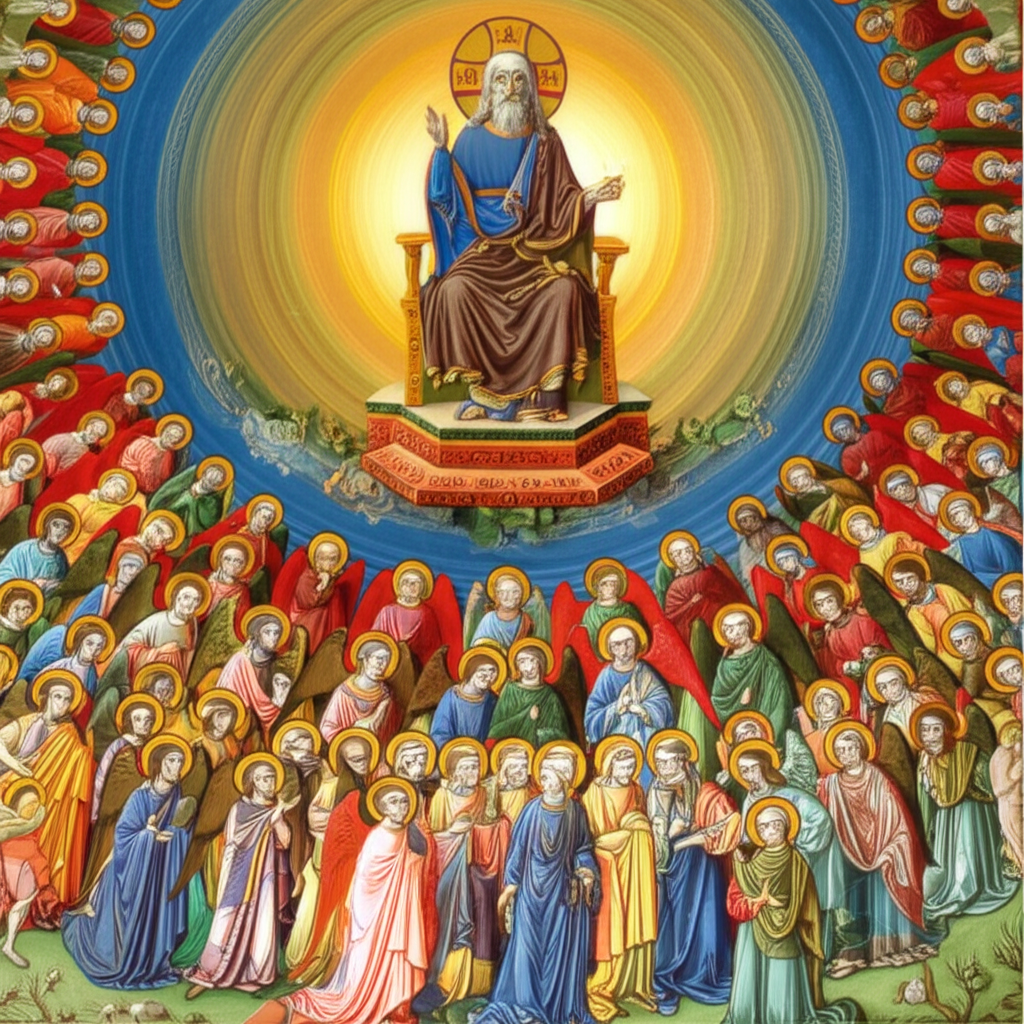
Theological and Philosophical Implications
The detailed Form of the angelic hierarchy is far more than a celestial roster; it embodies fundamental theological and philosophical principles:
- Divine Order and Providence: It underscores the belief that God governs the cosmos with perfect order and purpose. Every being, spiritual or material, has its place and function within the grand design.
- The Chain of Being: Reflecting Neoplatonic thought, it illustrates a gradual descent of being from the divine source, with each level participating in and reflecting the divine perfection to a lesser degree. This concept was deeply influential in Western thought.
- Understanding God's Nature: By studying the hierarchy, theologians sought to understand aspects of God's nature – His omnipotence, wisdom, love, and justice – as reflected through His creation.
- The Nature of Spiritual Beings: It provides a framework for comprehending the diverse capacities and intellects of non-corporeal entities, distinguishing them not just by name but by their very essence and proximity to the divine. This exploration of Form extends to the spiritual realm itself.
- Humanity's Place: While angels operate in a higher spiritual plane, their interaction with humanity (especially the lower choirs) emphasizes God's care and communication with the created world.
The angelic hierarchy, therefore, stands as a testament to the profound intellectual rigor applied to Theology and Religion throughout history. It is a conceptual masterpiece that seeks to impose a rational Form upon the ineffable mysteries of the divine, offering a compelling vision of a cosmos permeated by order, purpose, and the omnipresent hand of God.
📹 Related Video: ARISTOTLE ON: The Nicomachean Ethics
Video by: The School of Life
💡 Want different videos? Search YouTube for: "Dionysius the Areopagite Celestial Hierarchy explained"
📹 Related Video: KANT ON: What is Enlightenment?
Video by: The School of Life
💡 Want different videos? Search YouTube for: "Thomas Aquinas on Angels and Divine Order"