

Beyond the Slogan: Deconstructing Propaganda Through the Lens of Rhetoric
Summary: In an age saturated with information, understanding the sophisticated mechanisms of propaganda is more crucial than ever. This article delves into how propaganda, a pervasive force shaping public opinion, masterfully employs the principles of rhetoric – the art of persuasion – to influence thought and action. Drawing insights from the foundational texts of the Great Books of the Western World, we will explore how careful analysis of language can unveil the manipulative intent often hidden within the persuasive narratives disseminated by government and other powerful entities, empowering us to cultivate critical discernment.
The Ancient Roots of Persuasion: A Philosophical Inheritance
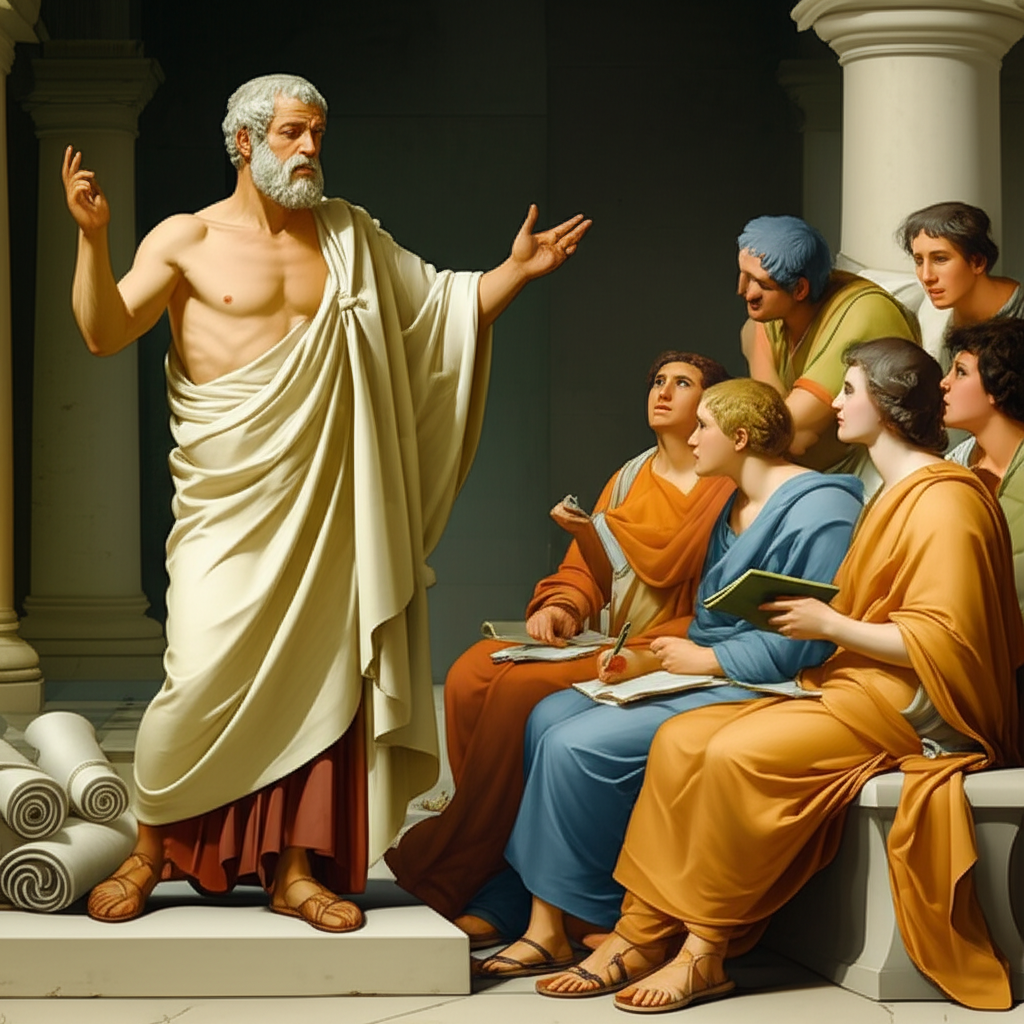
From the bustling agora of ancient Athens to the digital town squares of today, the power of persuasion has been a constant fascination for philosophers. The Great Books of the Western World offer an invaluable historical lens through which to examine rhetoric, not merely as a tool for public speaking, but as a fundamental force in shaping societal discourse. Aristotle, in his seminal work Rhetoric, meticulously dissected the art, identifying three primary appeals: ethos (credibility), pathos (emotion), and logos (logic). These ancient categories remain remarkably relevant, forming the bedrock upon which modern propaganda is built.
However, not all philosophers viewed rhetoric with unreserved admiration. Plato, for instance, through dialogues like Gorgias, expressed deep concerns about its potential for manipulation, especially when divorced from truth and justice. He saw the Sophists, masters of persuasive language, as purveyors of mere opinion rather than genuine knowledge. This tension between rhetoric as a noble art and as a dangerous instrument of deception is precisely what we confront when analyzing propaganda.
Propaganda's Playbook: The Misuse of Rhetorical Devices
Propaganda thrives on influencing public opinion, often by bypassing rational thought in favor of emotional appeals or distorted logic. It is, at its core, a deliberate and systematic effort to shape perceptions, manipulate cognitions, and direct behavior to achieve a response that furthers the desired intent of the propagandist. The tools it employs are, ironically, the very same rhetorical devices studied for centuries:
- Ethos (Appeal to Credibility):
- Transfer: Associating a respected figure (or symbol) with a cause, even if unrelated.
- Testimonial: Using endorsements from perceived authorities or celebrities.
- Plain Folks: Presenting leaders as ordinary citizens who understand common struggles.
- Pathos (Appeal to Emotion):
- Fear Appeals: Warning of dire consequences if a particular action isn't taken or belief isn't adopted.
- Bandwagon: Encouraging adherence by suggesting "everyone else is doing it."
- Glittering Generalities: Using emotionally appealing words (e.g., "freedom," "justice," "democracy") that are vague and lack specific meaning.
- Logos (Appeal to Logic - often distorted):
- Card Stacking: Presenting only evidence favorable to one's position, while suppressing contradictory evidence.
- Ad Hominem: Attacking the character of an opponent rather than their arguments.
- False Dilemma: Presenting only two options as if they are the only possibilities, when more exist.
Understanding these mechanisms, as outlined by classical rhetorical theory, is the first step in dismantling the persuasive power of propaganda.
The Architectonics of Language: Building (and Breaking Down) Belief
The careful choice and arrangement of language are paramount in propaganda. It's not just what is said, but how it's said. Words are not neutral; they carry connotations, evoke feelings, and frame narratives. A "freedom fighter" to one might be a "terrorist" to another, demonstrating how loaded terminology can instantly sway opinion.
Propaganda often employs:
- Euphemisms: Softening harsh realities (e.g., "collateral damage" instead of "civilian casualties").
- Dysphemisms: Using harsh terms to denigrate opponents (e.g., "warmongers," "radical extremists").
- Repetition: Constantly reiterating a message until it becomes familiar and thus, seemingly true.
- Slogans and Catchphrases: Concise, memorable phrases designed to stick in the mind and simplify complex issues.
By meticulously analyzing the linguistic choices, we can uncover the underlying intentions and biases. This close reading, a hallmark of philosophical inquiry, allows us to see past the veneer of persuasive rhetoric to the core message being implanted.
Government, Power, and the Public Sphere
The relationship between government and propaganda is complex and enduring. From ancient empires using grand narratives to legitimize their rule to modern states employing sophisticated media campaigns, the use of persuasive language to manage public perception is a consistent feature of political power. Niccolò Machiavelli, whose The Prince is a cornerstone of the Great Books, famously explored the pragmatic, often ruthless, methods rulers use to acquire and maintain power, implicitly acknowledging the necessity of shaping appearances and beliefs among the populace.
Whether it's rallying support for a war, promoting a new policy, or suppressing dissent, governments often leverage their access to communication channels to disseminate their preferred narratives. This isn't always malicious; a government might genuinely believe in the righteousness of its cause. However, the line between informing the public and manipulating public opinion through carefully constructed rhetoric can be perilously thin. Critical citizens must constantly evaluate the source, intent, and methods of official communications.
Cultivating Critical Discernment
To navigate the currents of modern propaganda, we must become adept at rhetorical analysis. This means:
- Identifying the Source: Who is communicating this message, and what is their agenda?
- Analyzing the Appeals: Is the message primarily relying on logic, emotion, or credibility? Are these appeals legitimate or manipulative?
- Deconstructing the Language: What specific words and phrases are being used? What are their connotations? How is the narrative framed?
- Seeking Counter-Narratives: What perspectives are being omitted or downplayed? What alternative interpretations exist?
By applying these analytical tools, rooted in centuries of philosophical inquiry into rhetoric and language, we can move beyond simply reacting to persuasive messages. We can begin to understand them, critique them, and ultimately, form our own informed opinion, rather than passively absorbing those crafted for us by government or other powerful forces. This intellectual vigilance is not just a philosophical exercise; it is a civic imperative.
**## 📹 Related Video: ARISTOTLE ON: The Nicomachean Ethics
Video by: The School of Life
💡 Want different videos? Search YouTube for: ""Aristotle's Rhetoric: Ethos, Pathos, Logos Explained for Beginners""**
**## 📹 Related Video: PLATO ON: The Allegory of the Cave
Video by: The School of Life
💡 Want different videos? Search YouTube for: ""How Propaganda Works: Understanding Manipulation Tactics""**