

Unmasking Deceit: Analyzing Propaganda Through the Lens of Rhetoric
This article delves into the intricate relationship between rhetoric and propaganda, exploring how the art of persuasion, a cornerstone of Western thought illuminated in the Great Books of the Western World, can be twisted to manipulate opinion. We will examine the historical and philosophical underpinnings of language as a tool for shaping public perception, particularly by government entities, and equip readers with the critical faculties necessary to discern truth from engineered narratives.
Introduction: The Unseen Architect of Belief
In an age saturated with information, understanding the mechanisms by which beliefs are formed and disseminated is more critical than ever. At the heart of this lies rhetoric—the art of effective or persuasive speaking or writing—and its often-nefarious sibling, propaganda. While rhetoric, in its purest form, can be a noble pursuit of truth and understanding, propaganda represents its corruption: the deliberate spread of information, often biased or misleading, to promote a particular political cause or point of view. To navigate the complex tapestry of modern discourse, a philosophical lens is indispensable, allowing us to dissect not just what is being said, but how it is being said, and why.
Rhetoric's Dual Nature: From Ancient Discourse to Modern Manipulation
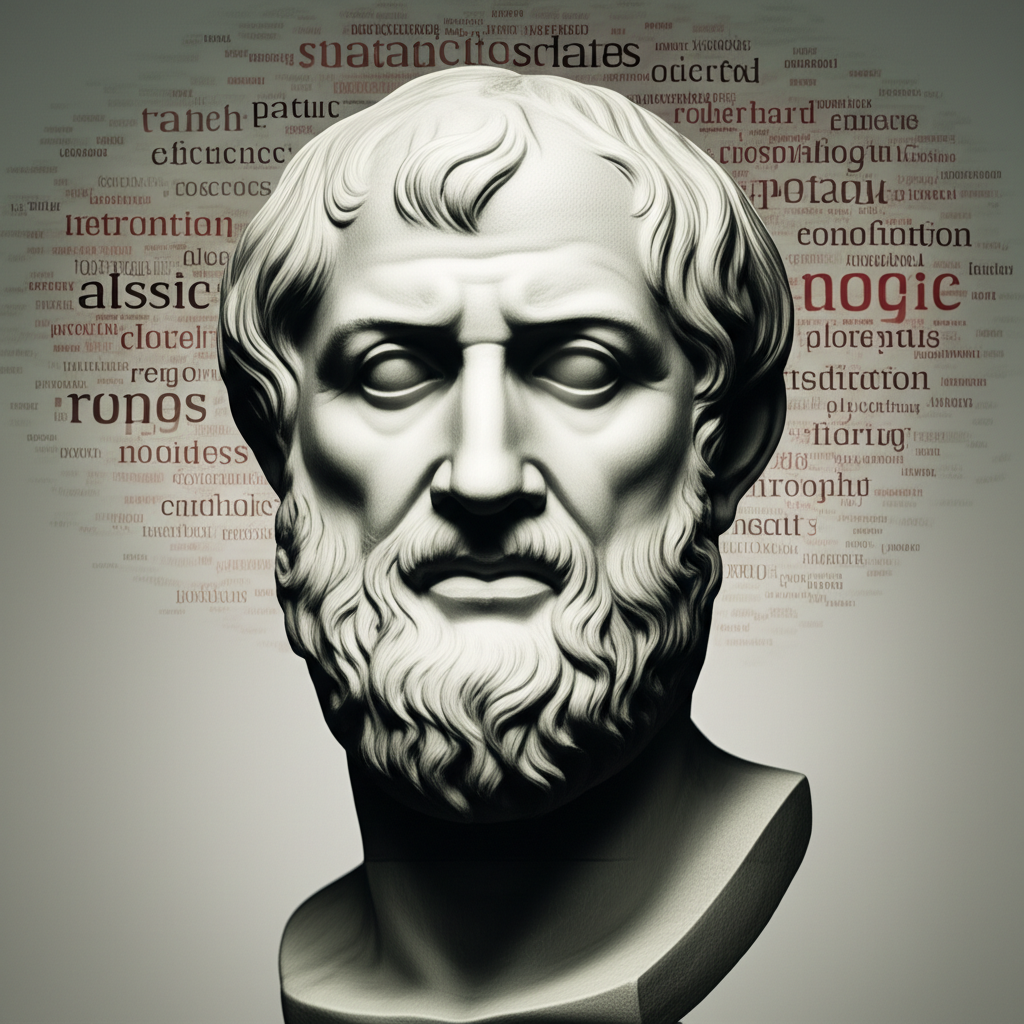
The foundations of our understanding of persuasion are deeply embedded in the Great Books of the Western World. Ancient Greek philosophers like Plato and Aristotle meticulously explored the power of rhetoric. Plato, in works such as Gorgias, viewed rhetoric with suspicion, often associating it with the Sophists—teachers who prioritized convincing over truth, skilled in making "the worse appear the better reason." Aristotle, however, in his treatise Rhetoric, offered a more systematic and neutral analysis, defining it as "the faculty of observing in any given case the available means of persuasion." He categorized these means into three primary appeals:
- Ethos (Credibility): Persuasion through the character and trustworthiness of the speaker.
- Pathos (Emotion): Persuasion by appealing to the audience's emotions.
- Logos (Logic): Persuasion by the use of reasoning and logical argument.
These classical understandings reveal rhetoric as a potent tool, capable of both elevating discourse and debasing it. Propaganda, in essence, seizes these very tools, not for reasoned debate, but for the singular purpose of shaping opinion and behavior, often by obscuring or distorting reality.
The Arsenal of Persuasion: How Language Shapes Opinion
The primary battleground for propaganda is language. Words are not merely vehicles for ideas; they are also instruments of influence. Propagandists meticulously craft their messages, exploiting the nuances of vocabulary, syntax, and narrative to evoke desired responses.
Consider the following techniques often employed:
- Euphemism and Dysphemism: Using softer words to mask harsh realities (e.g., "collateral damage" instead of "civilian deaths") or harsh words to demonize opponents (e.g., "terrorist" instead of "freedom fighter").
- Loaded Language: Employing words with strong emotional connotations to sway opinion without logical argument (e.g., "patriotic duty," "radical extremism").
- Repetition: Repeating a message, slogan, or idea until it gains an air of truth, regardless of its factual basis.
- Framing: Presenting an issue in a particular light to emphasize certain aspects while downplaying others, thereby directing interpretation.
By manipulating language, propagandists can subtly, or overtly, guide public perception, fostering consent, inciting fear, or consolidating power. The philosophical challenge is to see beyond the surface of these carefully constructed linguistic edifices.
Government and the Orchestration of Public Consent
Historically, and perhaps inevitably, government entities have been among the most prolific users of propaganda. From ancient empires proclaiming the divine right of kings to modern nation-states mobilizing populations for war or economic policy, the power of persuasive communication is a vital instrument of governance.
Governments often utilize rhetoric for:
- National Unity and Identity: Fostering a shared sense of purpose and belonging.
- Policy Implementation: Gaining public support for new laws, taxes, or initiatives.
- Crisis Management: Calming fears or directing blame during emergencies.
- International Relations: Shaping global opinion about a nation's actions or intentions.
However, the line between legitimate public information campaigns and manipulative propaganda can become dangerously blurred. When a government employs techniques designed to bypass critical thought and instead appeal directly to emotion or ingrained biases, it undermines the democratic ideal of an informed citizenry. Philosophically, this raises profound questions about individual autonomy, the nature of truth, and the ethical limits of state power.
| Propaganda Technique | Description | Example (General) |
|---|---|---|
| Ad Hominem | Attacking the character of an opponent rather than their arguments. | "Don't listen to her policy ideas; she's clearly unqualified." |
| Bandwagon | Appealing to the desire to belong or conform; "everyone else is doing it." | "Join the millions who support this initiative!" |
| Glittering Generalities | Using emotionally appealing words that are vague and lack specific meaning. | "For a brighter future, choose progress and liberty." |
| Name-Calling | Using derogatory labels to dismiss an idea or person. | "Only a radical would suggest that." |
| Red Herring | Introducing irrelevant information to distract from the main argument. | "While our economy faces challenges, let's focus on national pride." |
| Slippery Slope | Arguing that one action will inevitably lead to a chain of negative consequences. | "If we allow this small change, soon our entire way of life will crumble." |
Cultivating a Critical Eye: Navigating the Information Labyrinth
The antidote to propaganda is not cynicism, but philosophical vigilance and critical thinking. To analyze propaganda through rhetoric is to become an active, rather than passive, consumer of information. This requires:
- Questioning the Source: Who is communicating this message? What are their motives? What biases might they hold?
- Identifying Rhetorical Appeals: Is the message primarily appealing to emotion (pathos), authority (ethos), or logic (logos)? If it's heavily emotional, what facts might be missing or distorted?
- Analyzing Language: Look for loaded words, euphemisms, or oversimplifications. How does the choice of language shape your opinion?
- Seeking Multiple Perspectives: Do not rely on a single source of information. Compare different narratives and fact-check claims independently.
- Recognizing Logical Fallacies: Be aware of common errors in reasoning that propagandists often exploit (as outlined in the table above).
This active engagement with information empowers individuals to resist manipulation and form their opinion based on reasoned assessment rather than engineered persuasion.
Conclusion: The Enduring Imperative of Philosophical Vigilance
Understanding how rhetoric underpins propaganda is not merely an academic exercise; it is an essential skill for navigating our complex world. By drawing upon the philosophical insights gleaned from the Great Books of the Western World and applying a critical lens to the language and strategies employed by government and other influential entities, we can protect our opinion from undue influence. The pursuit of truth and the maintenance of a well-informed citizenry hinge upon our collective ability to unmask deceit and engage with ideas thoughtfully and critically.
📹 Related Video: ARISTOTLE ON: The Nicomachean Ethics
Video by: The School of Life
💡 Want different videos? Search YouTube for: ""Aristotle Rhetoric explained" or "How to identify propaganda techniques""