

Analyzing Propaganda through Rhetoric: A Philosophical Lens
In an age saturated with information, discerning truth from manipulation has become an essential skill. This article delves into how rhetoric, the art of persuasion, is deployed in propaganda to shape public opinion, often through the subtle and overt manipulation of language. Drawing insights from the philosophical traditions enshrined in the Great Books of the Western World, we will explore the mechanisms by which persuasive appeals can devolve into deceptive tactics, particularly when wielded by those in government or positions of power, and how a critical understanding of these tools can empower us to resist their influence.
The Unseen Architect of Belief: Understanding Rhetoric
At its core, rhetoric is the art of effective or persuasive speaking or writing. From the ancient Greek agora to modern digital forums, it has been the primary means by which ideas are conveyed, debated, and accepted. However, the line between genuine persuasion and manipulative propaganda is often finer than we'd like to believe.
Rhetoric's Dual Nature: Tool or Weapon?
The classical understanding of rhetoric, as articulated by figures like Aristotle in his seminal work Rhetoric, viewed it as a neutral art, a tool that could be used for good or ill. For Aristotle, rhetoric was the counterpart of dialectic, a means to discover the available means of persuasion in any given case. It involved understanding ethos (credibility of the speaker), pathos (emotional appeal), and logos (logical appeal).
However, philosophers like Plato, particularly in dialogues such as Gorgias, expressed deep skepticism, fearing that rhetoric, when divorced from a commitment to truth, could easily become a tool for sophistry—the art of making the weaker argument appear the stronger. This tension lies at the heart of our analysis of propaganda. Propaganda does not merely present an argument; it aims to implant an opinion or belief, often bypassing rational deliberation entirely.
The Anatomy of Propaganda: Shaping Public Opinion
Propaganda is, in essence, the systematic dissemination of information (often biased or misleading) to promote a particular political cause or point of view. Its goal is not to foster understanding or critical thought, but to cultivate a specific opinion or behavioral response within a target audience. It leverages rhetorical strategies to bypass our critical faculties, appealing instead to our emotions, prejudices, and pre-existing beliefs.
Consider the following key characteristics:
- Intentionality: Propaganda is never accidental; it is a deliberate, calculated effort.
- Mass Reach: It aims to influence a large number of people.
- Emotional Appeal: It frequently prioritizes pathos over logos, stirring fear, hope, anger, or patriotism.
- Simplification: Complex issues are often reduced to simplistic binaries (good vs. evil, us vs. them).
- Repetition: Messages are repeated consistently across various channels to enhance memorability and acceptance.
The Language of Manipulation: A Closer Look
The primary vehicle for propaganda is language. Words are not merely carriers of meaning; they possess immense power to evoke, categorize, and persuade. Propagandists expertly manipulate language to frame narratives, demonize opponents, and valorize their own positions.
Here are some common linguistic and rhetorical techniques employed in propaganda:
- Name-Calling/Ad Hominem: Attaching negative labels to individuals, groups, or ideas without providing evidence. (e.g., "Those unpatriotic dissidents...")
- Glittering Generalities: Using vague, emotionally appealing words that are not tied to concrete ideas. (e.g., "Freedom," "Justice," "Honor," "The American Way")
- Euphemism/Dysphemism: Using mild or vague language to obscure harsh realities (e.g., "collateral damage" for civilian deaths) or using harsh language to make something sound worse than it is.
- Transfer: Associating a person, idea, or product with something respected or revered. (e.g., a political candidate photographed with a national flag or a religious symbol).
- Testimonial: Using endorsements from respected or admired people (or despised people for negative propaganda) to promote or denounce an idea.
- Bandwagon: Appealing to the desire to be part of the majority. (e.g., "Everyone is doing it," "Join the winning side.")
- Card Stacking: Presenting only information favorable to an idea or product, omitting contradictory information.
- Plain Folks: Attempting to convince the audience that the propagandist's ideas are those of the common person. (e.g., "I'm just a regular guy like you.")
- Ad Populum (Appeal to Popularity): Asserting that something is true because many people believe it.
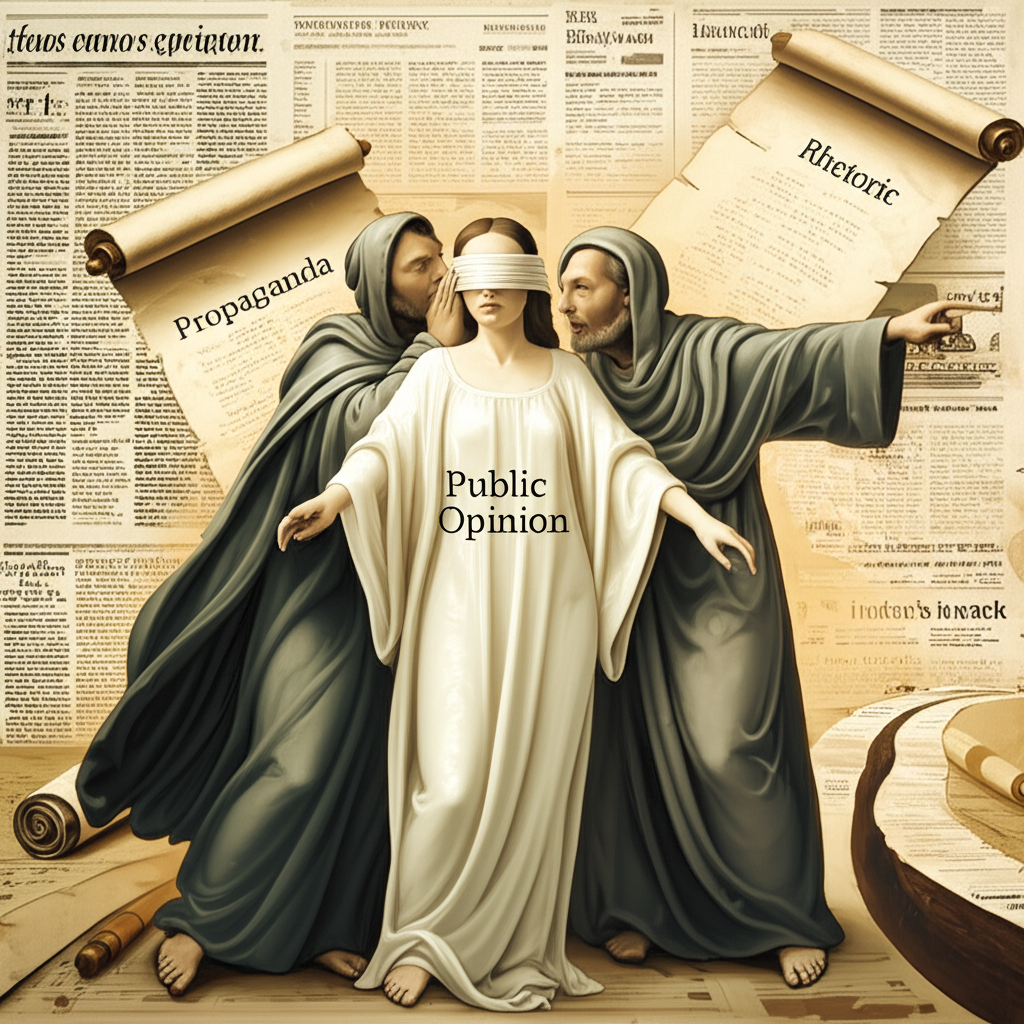
Propaganda and the Seat of Power: The Role of Government
Throughout history, government entities and those seeking political power have frequently utilized propaganda to maintain control, rally support for policies, or suppress dissent. From ancient empires using monumental art and grand narratives to solidify their rule, to modern states employing sophisticated media campaigns, the nexus between power and persuasion is undeniable.
The concern for philosophers, from Plato to those grappling with modern totalitarian regimes, has always been the potential for those in authority to manipulate public discourse for self-serving ends. When a government controls the flow of information, dissent can be stifled, and critical thought can be replaced by an manufactured consensus. This makes the ability to analyze rhetorical strategies not just an academic exercise, but a civic imperative for a functioning democracy.
Cultivating Critical Discernment: Our Defense Against Deception
So, how do we, as individuals, navigate this complex landscape of persuasive appeals and deceptive tactics? The answer lies in cultivating critical discernment, a skill honed through philosophical inquiry and a commitment to rational thought.
- Question the Source: Who is communicating this message, and what is their agenda?
- Analyze the Language: Look for loaded words, emotional appeals, and logical fallacies. Is the message designed to evoke a strong emotional response rather than a rational one?
- Seek Multiple Perspectives: Don't rely on a single source of information. Engage with diverse viewpoints, even those that challenge your own. This echoes the Socratic method, where truth emerges from robust questioning and debate.
- Examine the Evidence: Is there verifiable evidence to support the claims being made, or are they based on assumption, anecdote, or assertion?
- Understand Your Own Biases: We all have preconceived notions. Self-awareness of our own intellectual vulnerabilities is the first step in guarding against manipulation.
By engaging with the foundational texts of philosophy – the Great Books of the Western World – we are reminded of the enduring human struggle for truth, justice, and clarity of thought. These works provide not just historical context but also timeless tools for critical analysis, equipping us to identify and resist the insidious workings of propaganda.
Conclusion: The Enduring Pursuit of Truth
Analyzing propaganda through the lens of rhetoric reveals that the battle for truth is often fought on the battleground of language and opinion. While government and powerful entities may wield sophisticated tools of persuasion, our most potent defense lies in our capacity for critical thought, informed by the wisdom of philosophical inquiry. In an age of information overload, the ability to dissect and understand the rhetorical strategies at play is not just an intellectual exercise, but a vital act of self-preservation and civic responsibility.
📹 Related Video: ARISTOTLE ON: The Nicomachean Ethics
Video by: The School of Life
💡 Want different videos? Search YouTube for: ""Aristotle Rhetoric Summary" for a concise overview of classical rhetoric."
📹 Related Video: PLATO ON: The Allegory of the Cave
Video by: The School of Life
💡 Want different videos? Search YouTube for: ""Propaganda Techniques Explained" for examples of how propaganda works in practice."