

Analyzing Political Systems through Logic: A Foundation for Understanding the State
At the heart of any stable and just State lies a framework of coherent thought. This article explores how applying logic and rigorous reasoning can illuminate the complexities of various forms of government, allowing us to dissect their structures, evaluate their efficacy, and understand their philosophical underpinnings. By employing the tools of logic, drawn from the rich tradition of the Great Books of the Western World, we can move beyond mere opinion to a more profound comprehension of political systems and their impact on society.
The Indispensable Role of Logic in Political Thought
From the ancient Greek city-states to modern democracies, philosophers have grappled with the fundamental questions of how societies should be organized and governed. Their enduring contributions, many found within the Great Books, are testaments to the power of logic and systematic reasoning. When we speak of analyzing political systems through logic, we are not merely talking about abstract philosophical exercises; we are discussing the critical evaluation of how power is distributed, decisions are made, and justice is administered within a government.
Logic provides the framework for:
- Consistency: Ensuring that political principles, laws, and policies do not contradict each other.
- Validity: Assessing whether conclusions about governance follow necessarily from their premises.
- Coherence: Examining if the various parts of a State's structure and function work together harmoniously.
- Clarity: Demanding precise definitions and unambiguous arguments in political discourse.
Without a logical approach, political debate devolves into rhetoric, and the foundations of government become susceptible to arbitrary rule or mob mentality.
Historical Perspectives: Logic and the Architecture of the State
The philosophers whose works populate the Great Books often built their ideal or analyzed existing political systems with an implicit, if not explicit, reliance on logic.
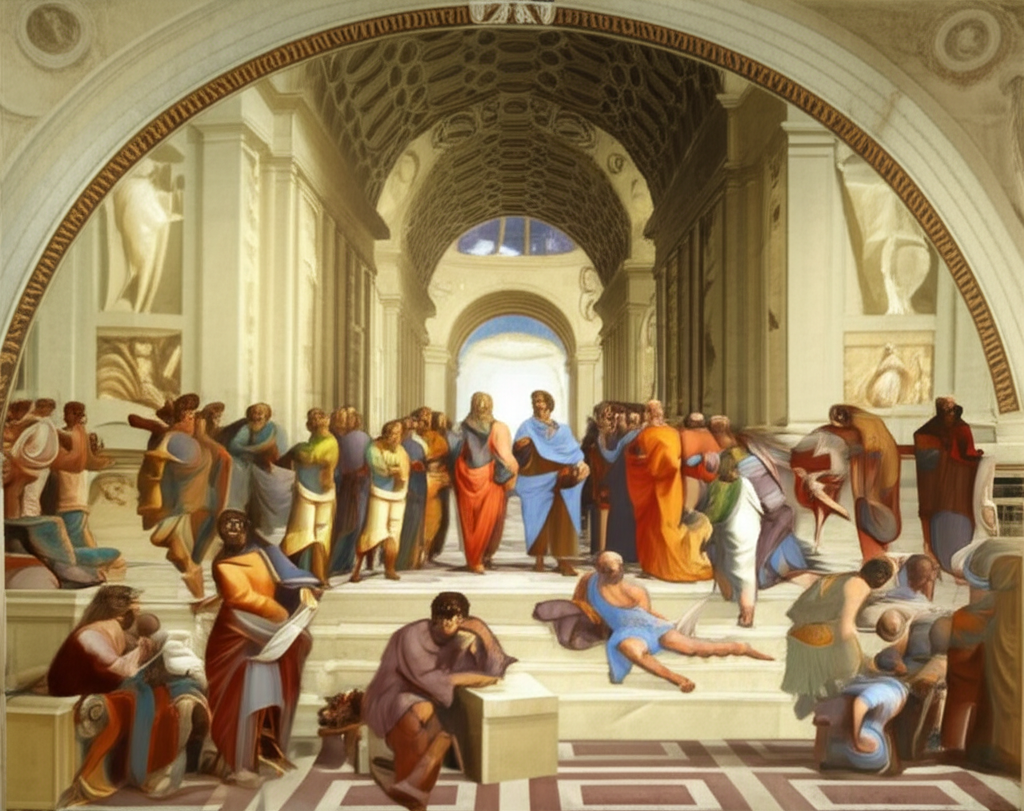
- Plato's Republic: Plato, in his quest for justice, meticulously constructs an ideal State based on the reasoning that society should mirror the tripartite soul, with each class performing its function harmoniously. His arguments for philosopher-kings are a logical deduction from the premise that knowledge and wisdom should guide the State.
- Aristotle's Politics: Aristotle, a student of Plato, took a more empirical approach, analyzing hundreds of existing constitutions. His classification of governments (monarchy, aristocracy, polity, and their corrupt forms: tyranny, oligarchy, democracy) is a masterful exercise in inductive reasoning, categorizing and evaluating based on observed patterns and their logical implications for the common good.
- Hobbes' Leviathan: Thomas Hobbes constructs his argument for an absolute sovereign through a powerful chain of deductive reasoning. Starting from a bleak assessment of the "state of nature," he logically concludes that a powerful State is the only rational solution to avoid perpetual war and ensure security.
- Locke's Two Treatises of Government: John Locke, in contrast, uses logic to argue for natural rights and limited government. His reasoning leads to the conclusion that government derives its legitimacy from the consent of the governed and that its power should be constrained to protect individual liberties.
These foundational texts demonstrate that the very concept of the State and its various forms of government are often logical constructs, products of careful reasoning about human nature, society, and power.
Applying Logical Reasoning to Contemporary Governance
The lessons from these historical thinkers are not confined to dusty library shelves. They offer a potent methodology for analyzing modern political systems. When we examine policy proposals, constitutional amendments, or international agreements, we can employ logical tools to assess their soundness.
Consider the following aspects of government where logic is paramount:
Evaluating Policy Coherence
* Does a proposed policy logically follow from its stated objectives? * Are there internal contradictions within the policy's design or anticipated outcomes? * What are the logical implications of implementing this policy?Identifying Logical Fallacies in Political Discourse
Political rhetoric often employs persuasive but fallacious arguments. Recognizing these is a crucial application of *logic*.| Fallacy Type | Description | Example in Political Context |
|---|---|---|
| Ad Hominem | Attacking the person rather than their argument. | "We can't trust her economic plan; she's never run a business." |
| Straw Man | Misrepresenting an opponent's argument to make it easier to attack. | "My opponent wants to abolish all police, leaving our communities defenseless." (when the opponent proposed police reform) |
| False Dichotomy | Presenting only two options as if they are the only possibilities. | "You're either with us or against us on this issue." |
| Slippery Slope | Claiming that one action will inevitably lead to a series of negative events. | "If we allow this small regulation, soon the government will control every aspect of our lives." |
| Appeal to Emotion | Manipulating an emotional response in place of a valid argument. | "Think of the children! We must pass this law to protect them from this looming danger." |
Analyzing the Structure of the State
* Is the division of powers within a *government* logically sound and designed to prevent tyranny? * Do the checks and balances effectively operate, or are there logical gaps that allow for abuse? * How do different electoral systems logically translate votes into representation?The Imperative of Critical Reasoning for a Robust State
Ultimately, a strong and resilient State is one built upon sound reasoning. Citizens, leaders, and institutions alike benefit from applying logic to political questions. This approach encourages intellectual honesty, fosters productive debate, and enables the collective pursuit of justice and the common good. By consistently asking "Does this make sense?" and "What are the logical consequences?", we actively participate in shaping a more rational and therefore more effective government. The legacy of the Great Books reminds us that the quest for a better State is, at its core, a journey guided by the unwavering light of logic.
📹 Related Video: PLATO ON: The Allegory of the Cave
Video by: The School of Life
💡 Want different videos? Search YouTube for: ""Plato's Republic explained" or "Aristotle's classification of governments""
📹 Related Video: ARISTOTLE ON: The Nicomachean Ethics
Video by: The School of Life
💡 Want different videos? Search YouTube for: ""Logical fallacies in political arguments""