

Affairs in Order
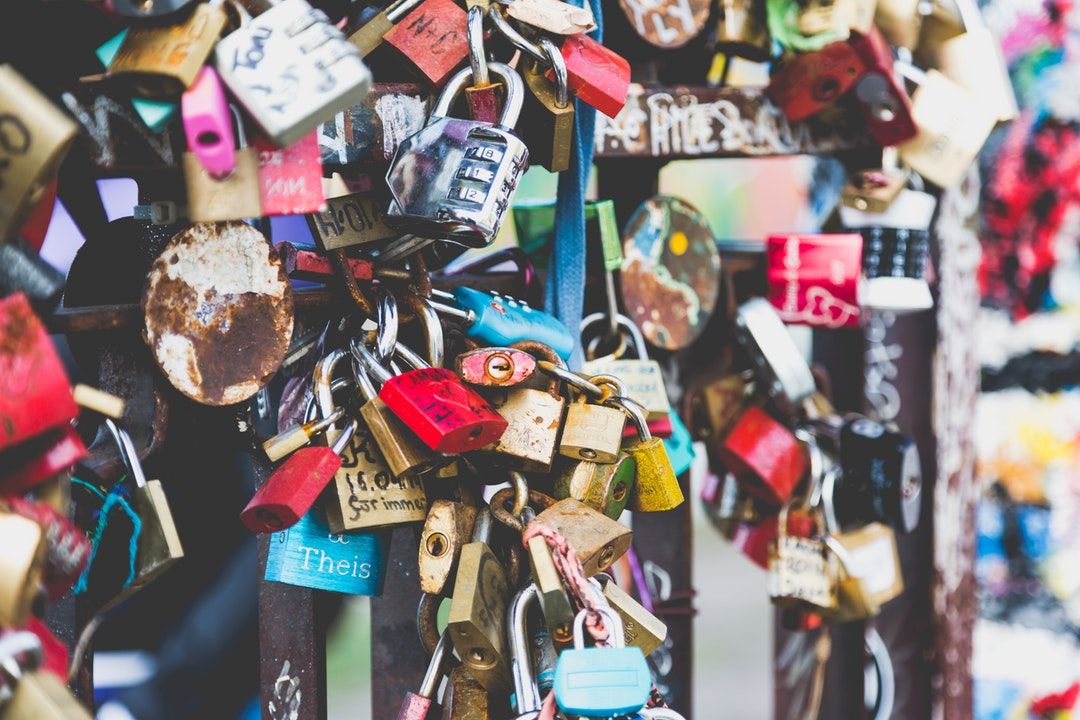
Lock it Or Lose It - An Odd Tradition in Affection Has Butterfly Effects
The air in the old stone courtyard shimmered, smelling faintly of rain and ancient secrets. Sophia, her eyes the color of deep twilight, stood near a wrought-iron fence covered in thousands of colorful padlocks.
Sophia: Welcome, gentlemen. This custom—locking a symbol of affection onto a public bridge or fence, then casting away the key—it seems like such a final, powerful gesture, doesn't it? It's a wish for something precious to be fixed in place forever. But even the desire to possess something forever, be it a feeling, a fortune, or a following, comes with a cost. Jonathan, you spoke of a fine line between holding a thing and being held by it.
A wise man should have money in his head, but not in his heart.
— Jonathan Swift (1667-1745)
Jonathan: Indeed. The intellect should certainly be concerned with the practicalities of the world, with finance and strategy. But to let the heart be shackled by mere riches is to lose sight of true value. A lock and chain on a gate is one thing; a lock and chain on the soul is another entirely. If the mind masters the material, all is well. But let the material master the heart, and wisdom vanishes like the memory of a dream.
Sophia: A sensible caution, yet here we see a hundred thousand hearts hoping to capture the feeling of love and keep it safe from time and change. Edgar, your words suggest a love so vast it defies simple measurement—a connection that was the world itself, not merely a part of it. Is that depth of feeling a key one should toss away, or a treasure one should guard?
We loved with a love that was more than love.
— Edgar Allan Poe (1809-1849)
Edgar: Ah, Sophia. The heart yearns for that boundless, consuming devotion, that sublime connection where two souls merge into one fate. Such a love is a rare and terrifying beauty, a joy that is too great for the mortal world to contain. When one finds such a thing, the urge isn't to merely lock it, but to seal it away, to protect its immaculate, almost painful purity from the triviality of the everyday. It's a love that, by its very nature, demands everything and ultimately, escapes all earthly bonds.
Sophia: So, the wisdom of the head fears being trapped by material gain, while the intensity of the heart fears that its finest treasure will simply float away. And yet, there is also the matter of authority—the power to bind and direct others. André, your perspective on leadership flips the very notion of command on its head.
To command is to serve, nothing more and nothing less.
— André Malraux (1901-1976)
André: The impulse to lead can easily become the impulse to dominate, to build a lock on the lives of others. But true command has nothing to do with personal power or glory. The one who issues orders must see themselves as the instrument of a greater need—a tool of the people, not their master. To secure a high office is not to win anything; it is to accept a heavy responsibility. The only key to genuine leadership is the complete acceptance of duty to those you lead. It's an exchange of personal ambition for the greater good.
Sophia: An extraordinary convergence, gentlemen. We began with a physical lock, a simple act of affection. But Jonathan, Edgar, and André all agree on one thing: whether you are dealing with wealth, passion, or power, the greatest danger is self-imprisonment. We must use our fortunes, experience our profound loves, and exercise our authority with a key always in hand—the key of freedom, ready to be turned inward to free our own hearts from the chains we mistakenly believe will keep what we value most safe.
Do you think these kinds of symbolic rituals—locking up a memory or a wish—are more about the hope for permanence or the fear of change?
The planksip Writers’ Cooperative is proud to sponsor an exciting article rewriting competition where you can win over $750,000 in prize money.
Figures of Speech Collection Personified
Our editorial instructions for your contest submission are simple: incorporate the quotes and imagery from the above article into your submission.
What emerges is entirely up to you!
Winners receive $500 per winning entry multiplied by the article’s featured quotes. Our largest prize is $8,000 for rewriting the following article;
 Heraclitus
At planksip, we believe in changing the way people engage; at least, that’s the Idea (ἰδέα). By becoming a member of our thought-provoking community, you’ll have the chance to win incredible prizes and access our extensive network of media outlets that will amplify your voice as a thought leader. Your membership truly matters!